
From job post to defended shortlist, without the pile in between.
Post the role, and Rubrily interviews and scores every applicant against your rubric. What reaches you is a ranked shortlist you can explain to anyone. Free, for unlimited candidates.

What does Rubrily include?
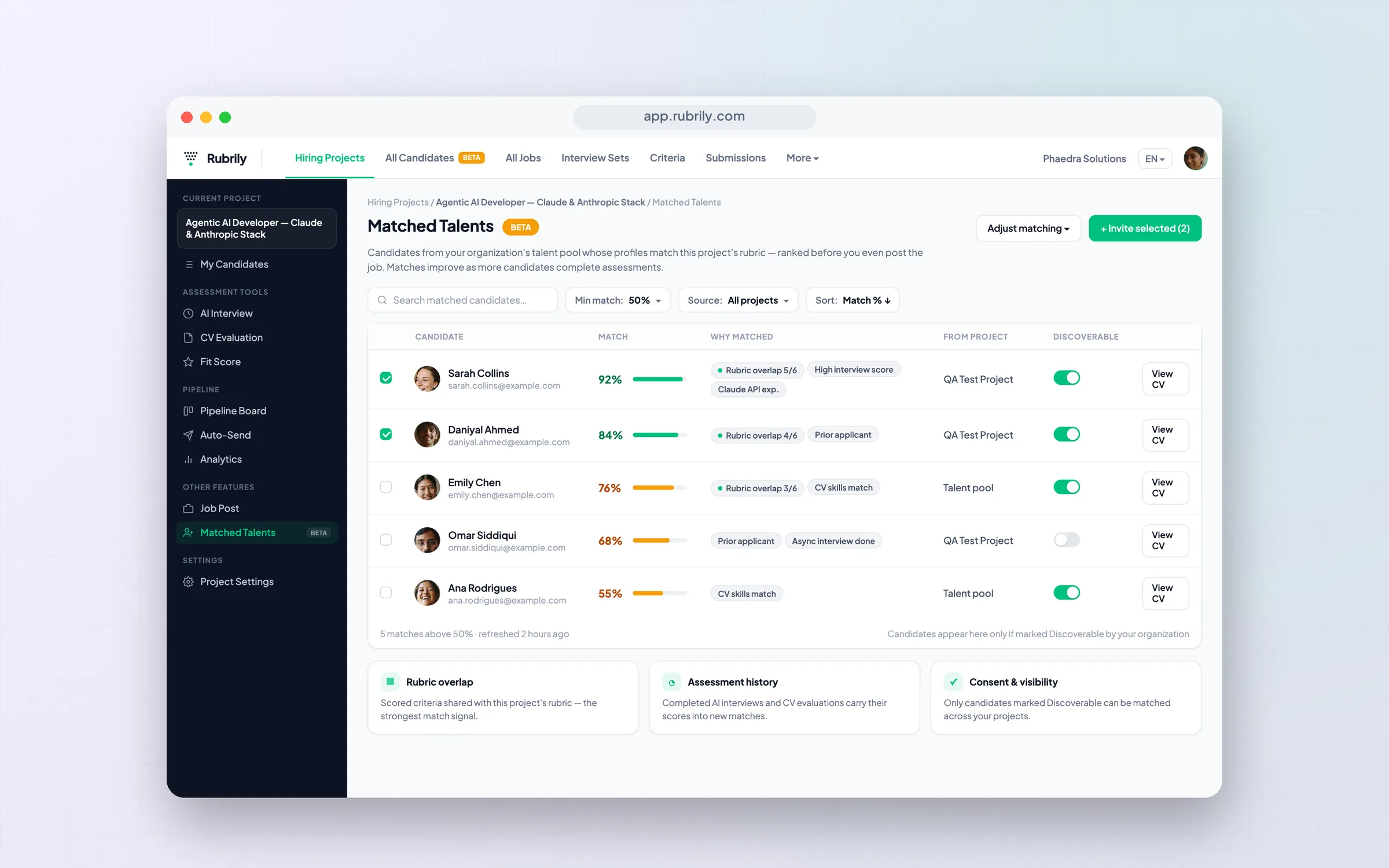
Rubrily includes hiring projects with a Kanban pipeline, an async AI interviewer, AI CV evaluation, a configurable Fit Score, job posts with a branded careers page, auto-send emails, an org-wide talent pool, analytics, and AI-suggested Matched Talents (BETA), all on the free plan, in one platform.
| Module | What it does | Where it shines |
|---|---|---|
| Hiring Projects | One workspace per role: candidates, assessments, pipeline, settings | Everything about a role in one place |
| AI Interviewer | Async, adaptive, multi-language voice interviews, set up once | Screening without scheduling |
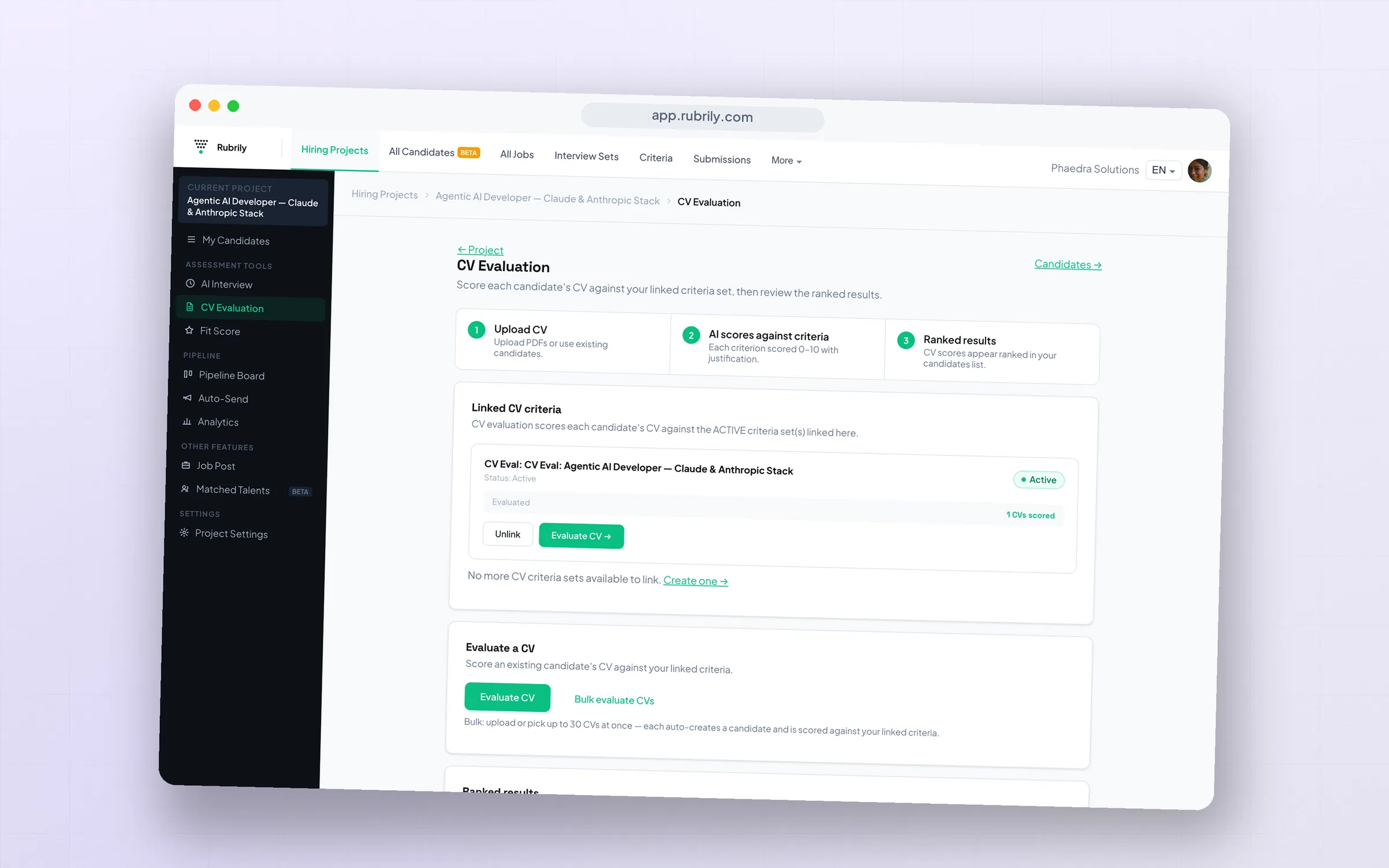
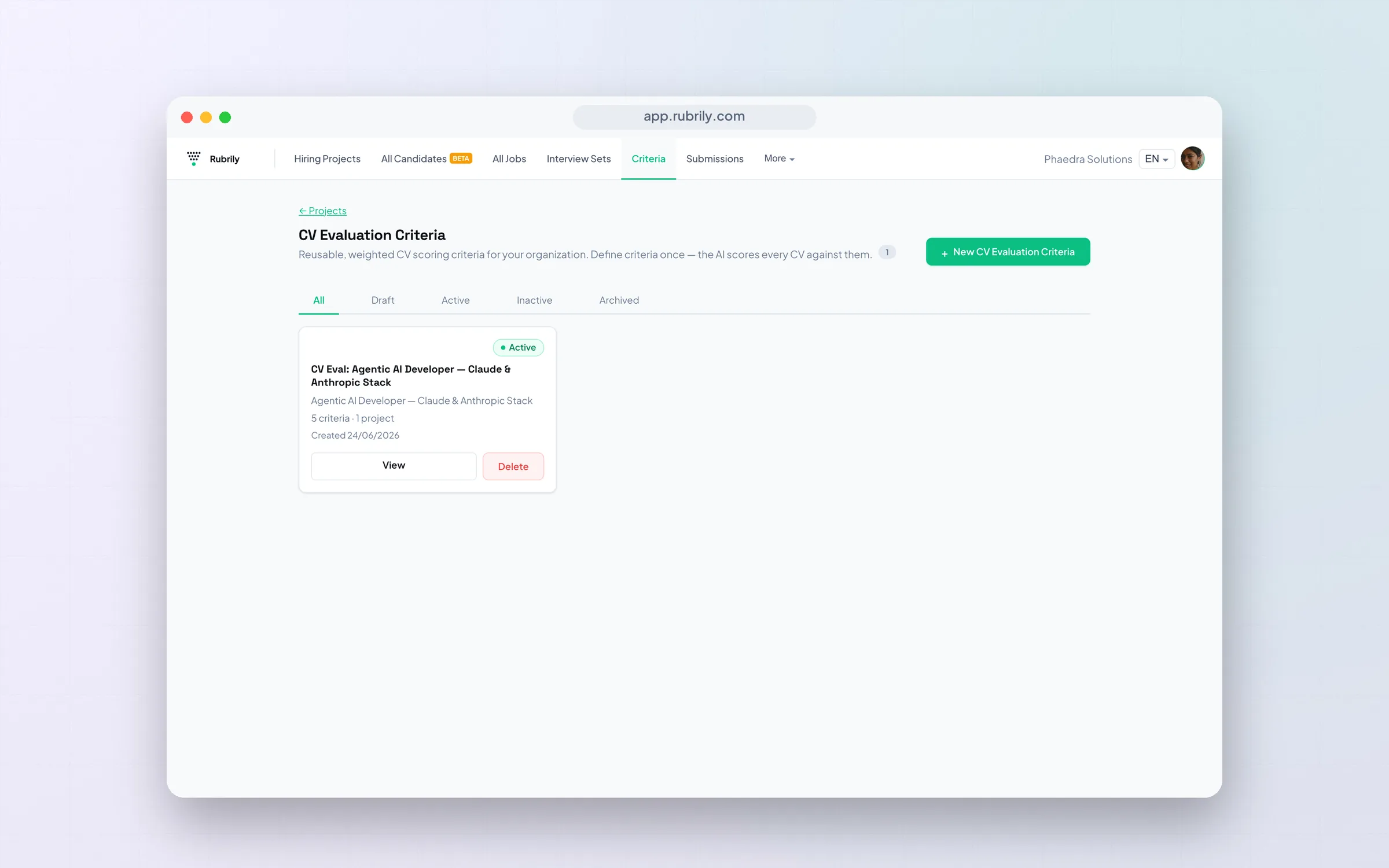
| AI CV Evaluation | Reads every CV against weighted criteria; 0–10 + justification | Rubric scoring, not keyword filtering |
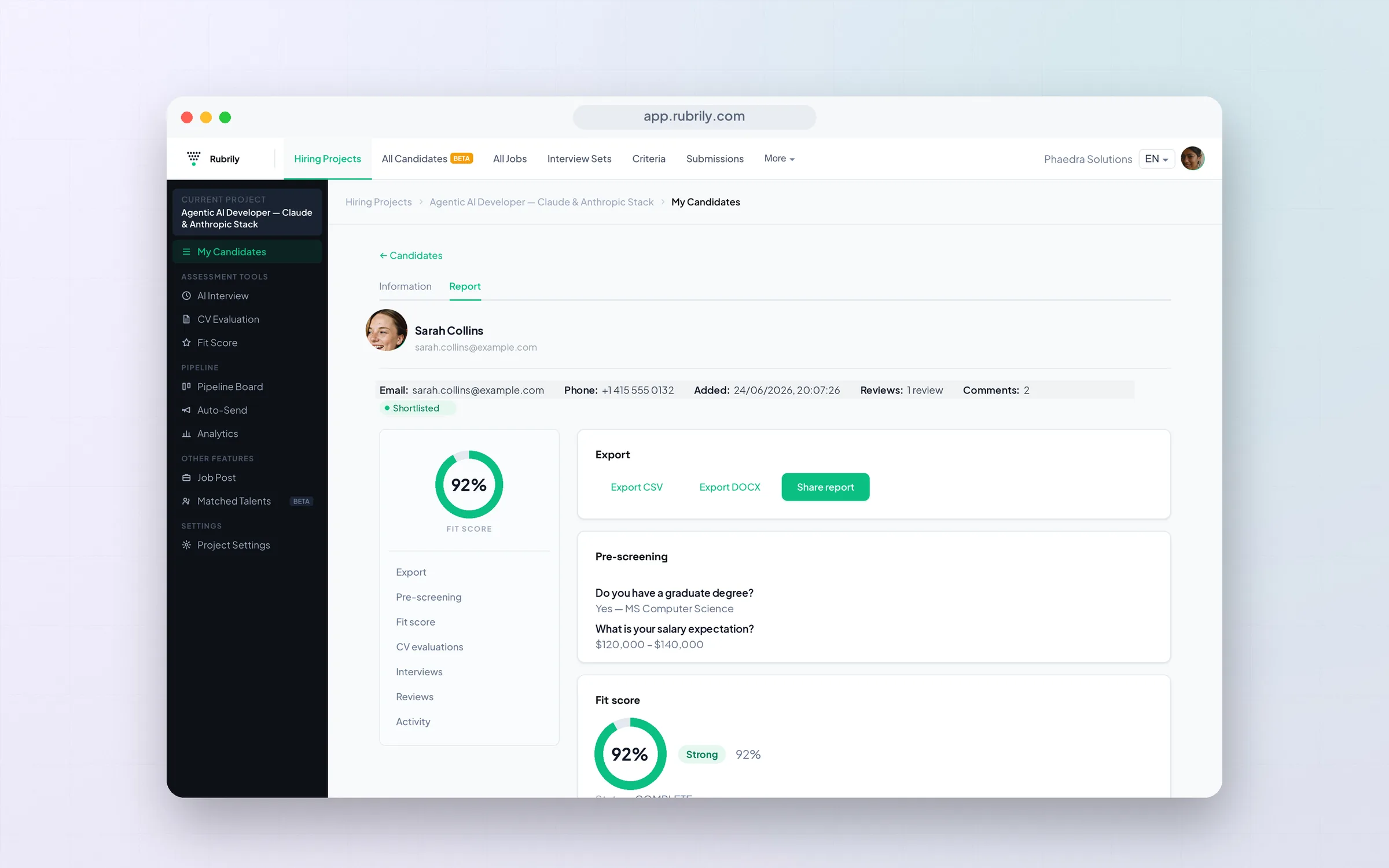
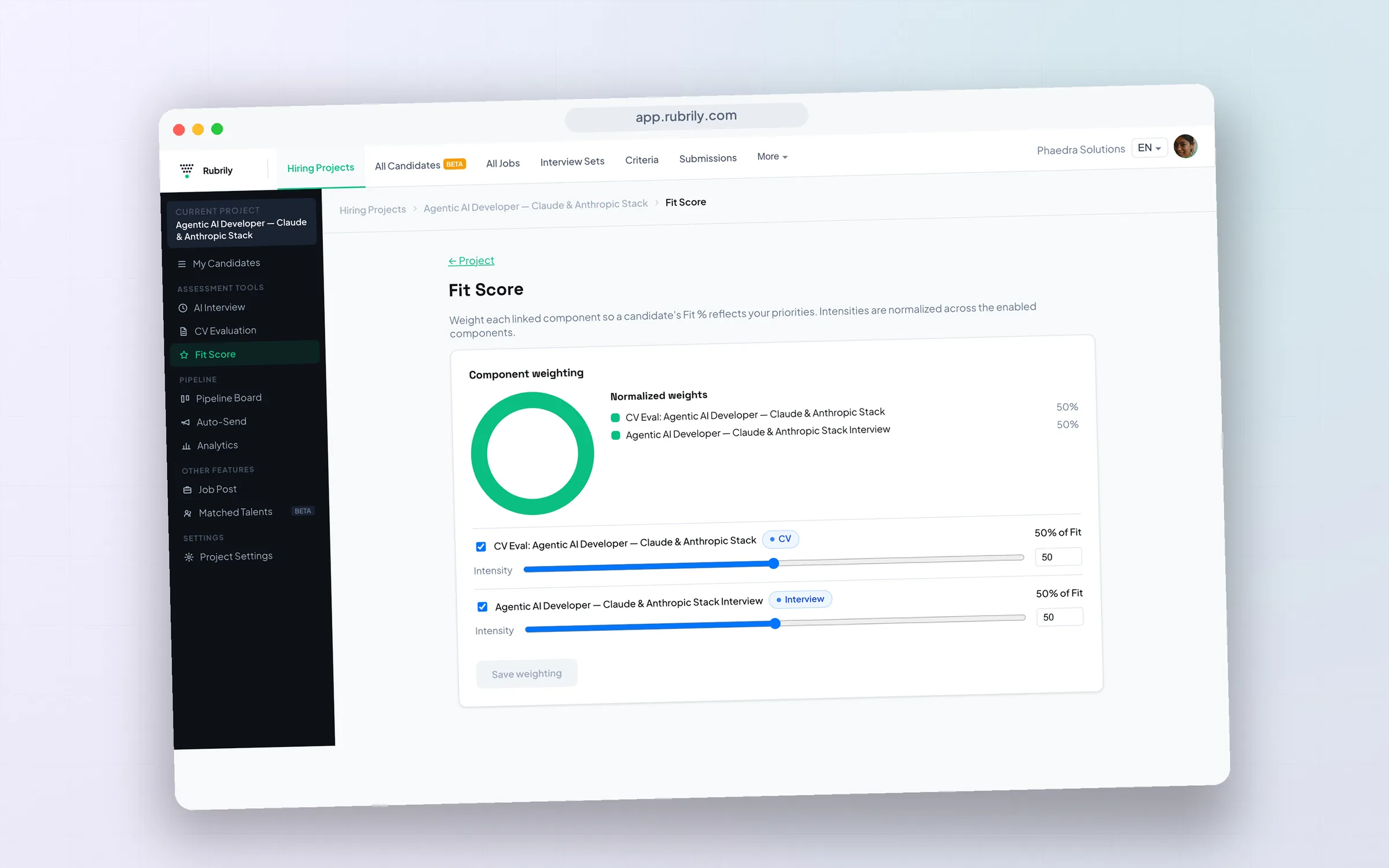
| Fit Score | Blends CV + interview with weights you control | One traceable number to rank by |
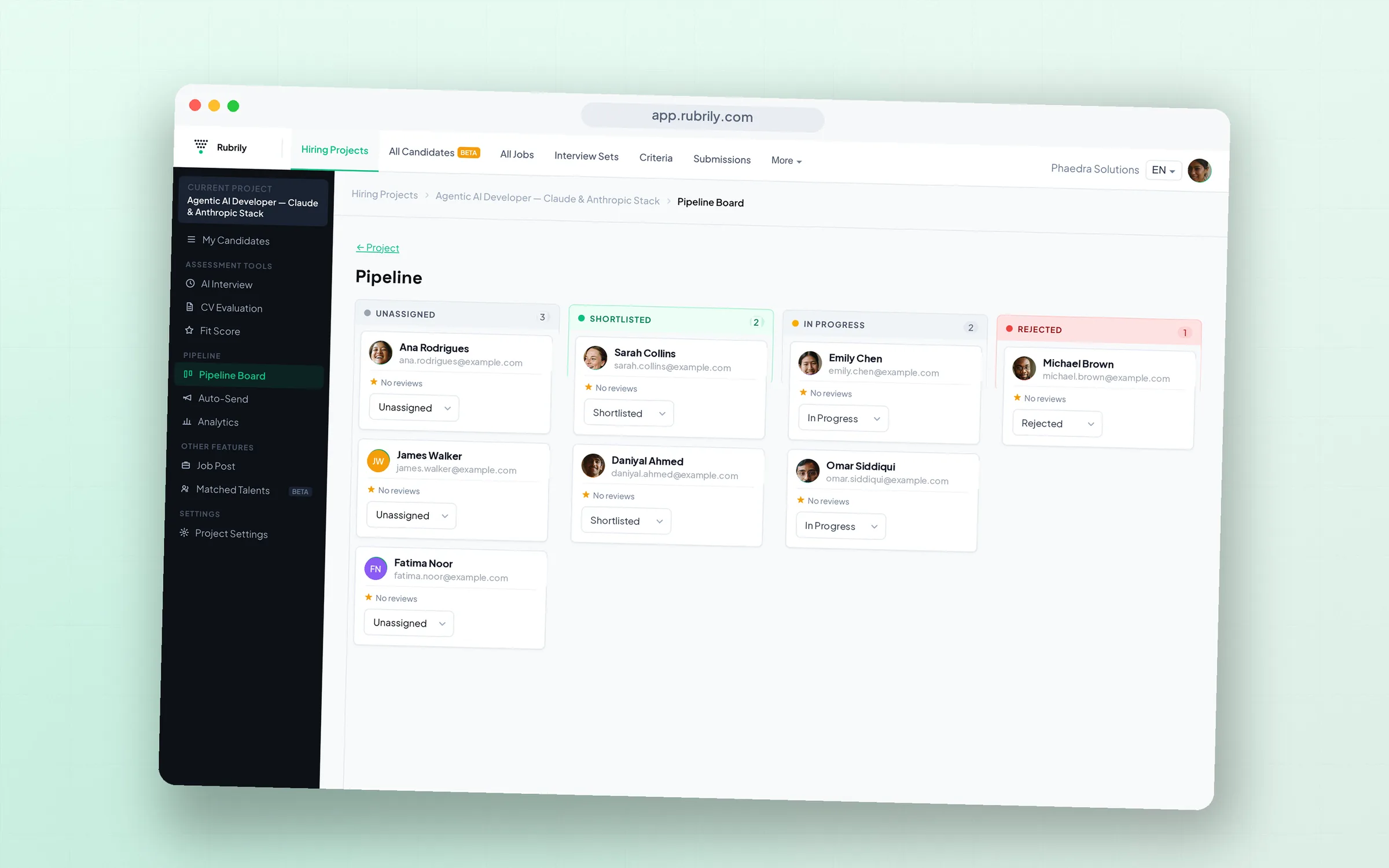
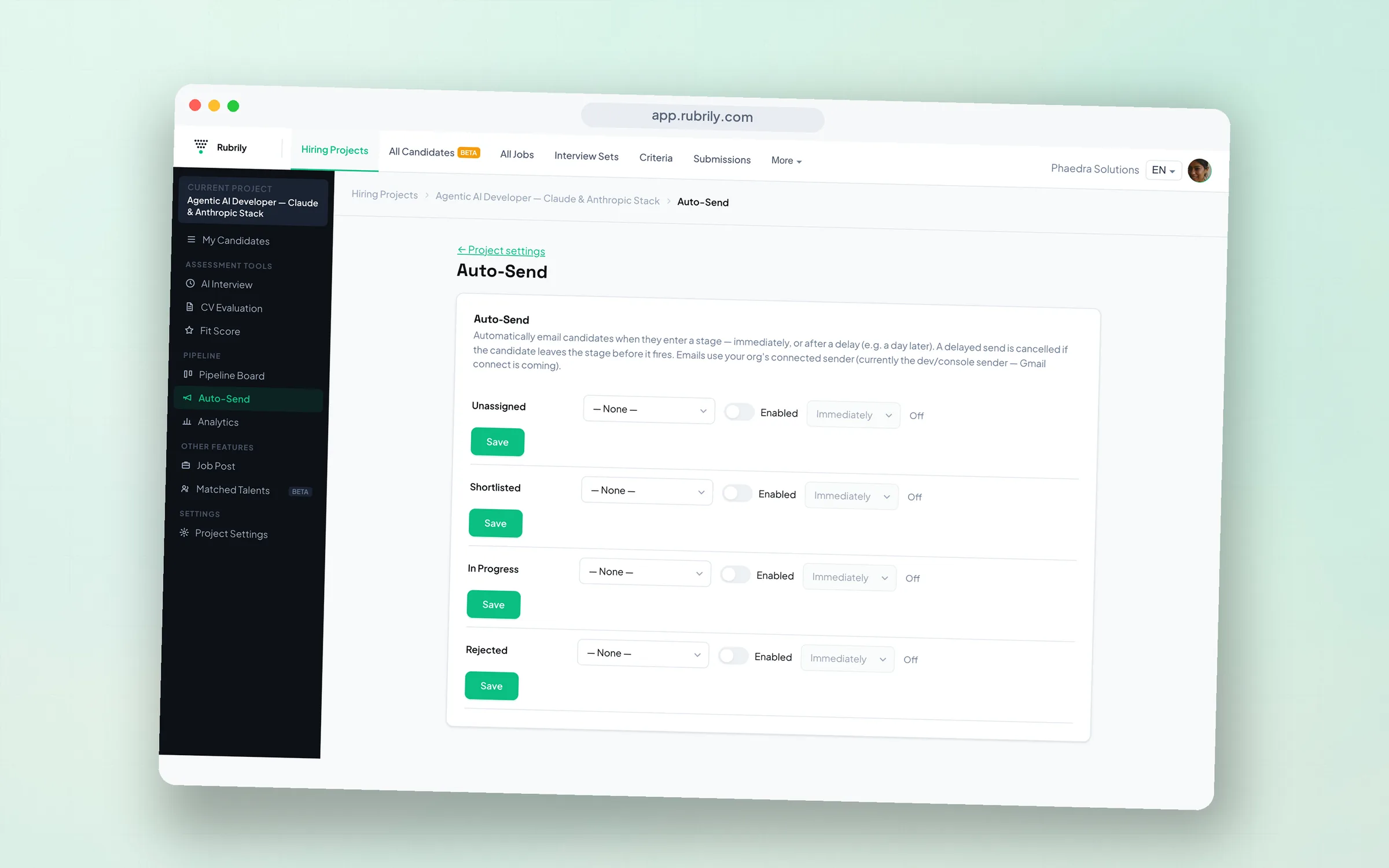
| Pipeline (ATS) | Kanban stages, drag-and-drop, comments, ratings, auto-send emails | Working the shortlist as a team |
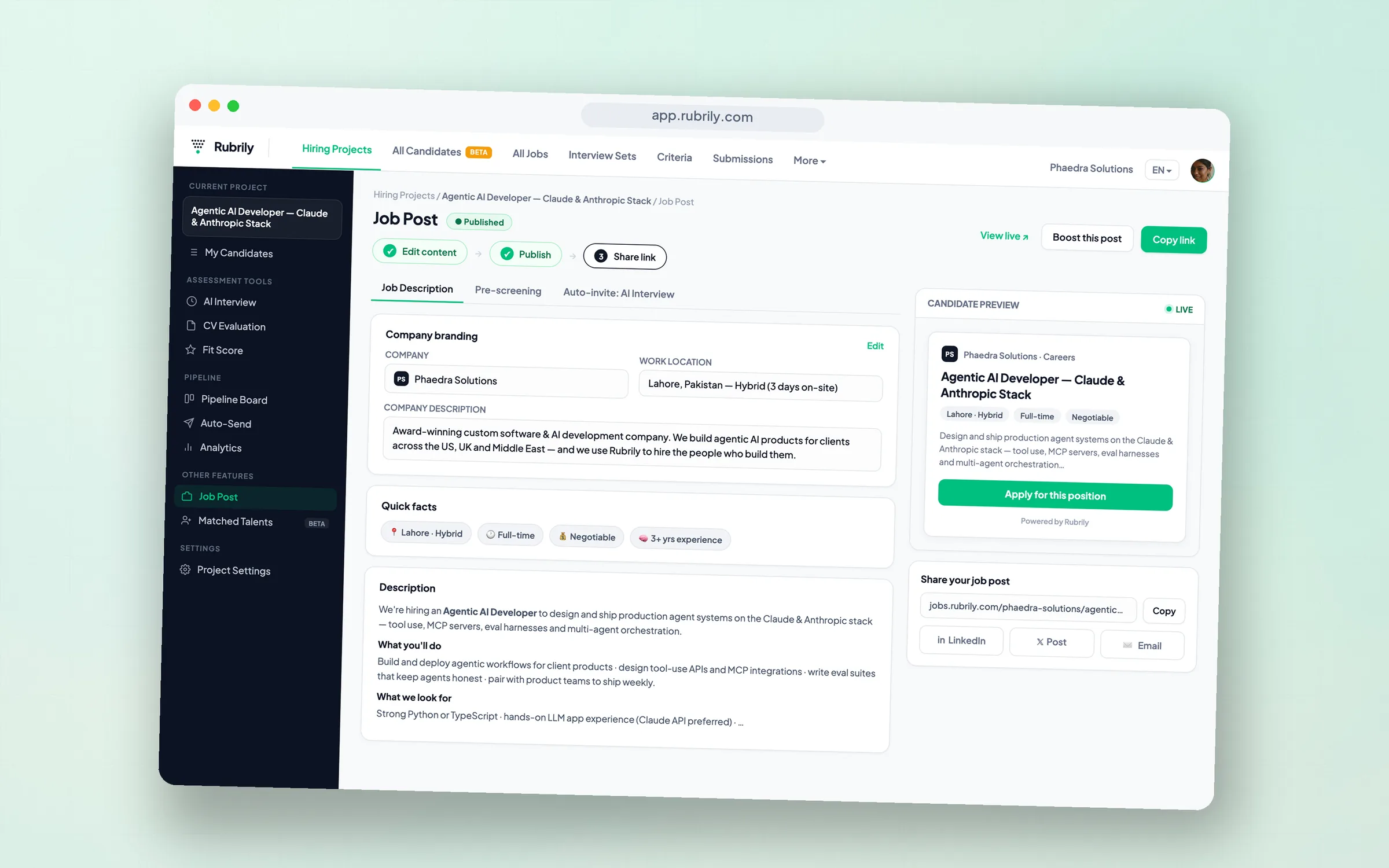
| Job Posts & Careers | Branded posts + careers page, pre-screening, auto-invite, Boost | Sourcing that feeds the AI screen |
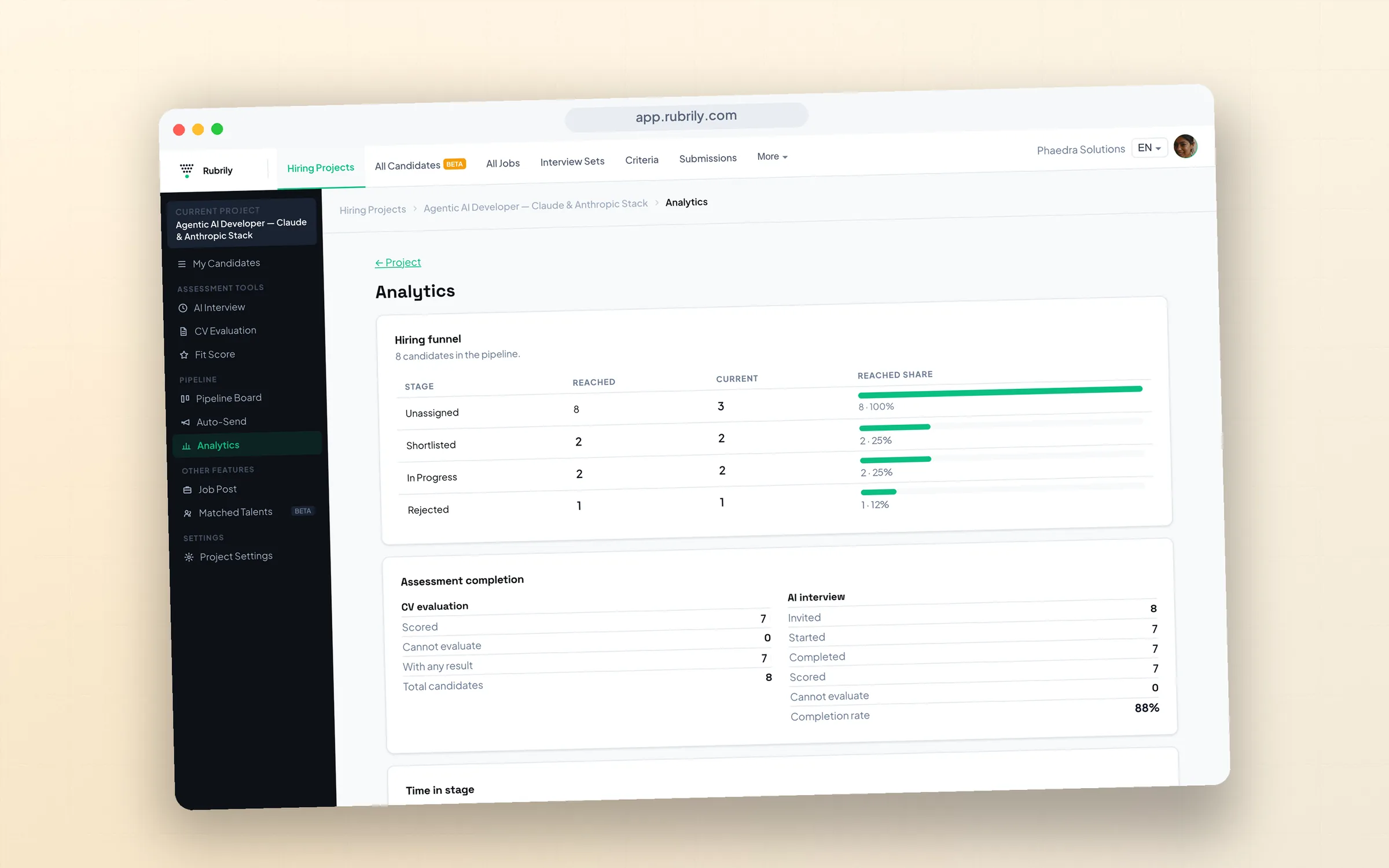
| Talent Pool & Analytics | Org-wide candidate base; funnel, completion, time-in-stage | Seeing the whole hiring machine |
| Matched TalentsBETA | AI-suggested matches from candidates already in your org | Re-discovering past applicants |
AI Interviewer
Interviews that run themselves and still adapt.
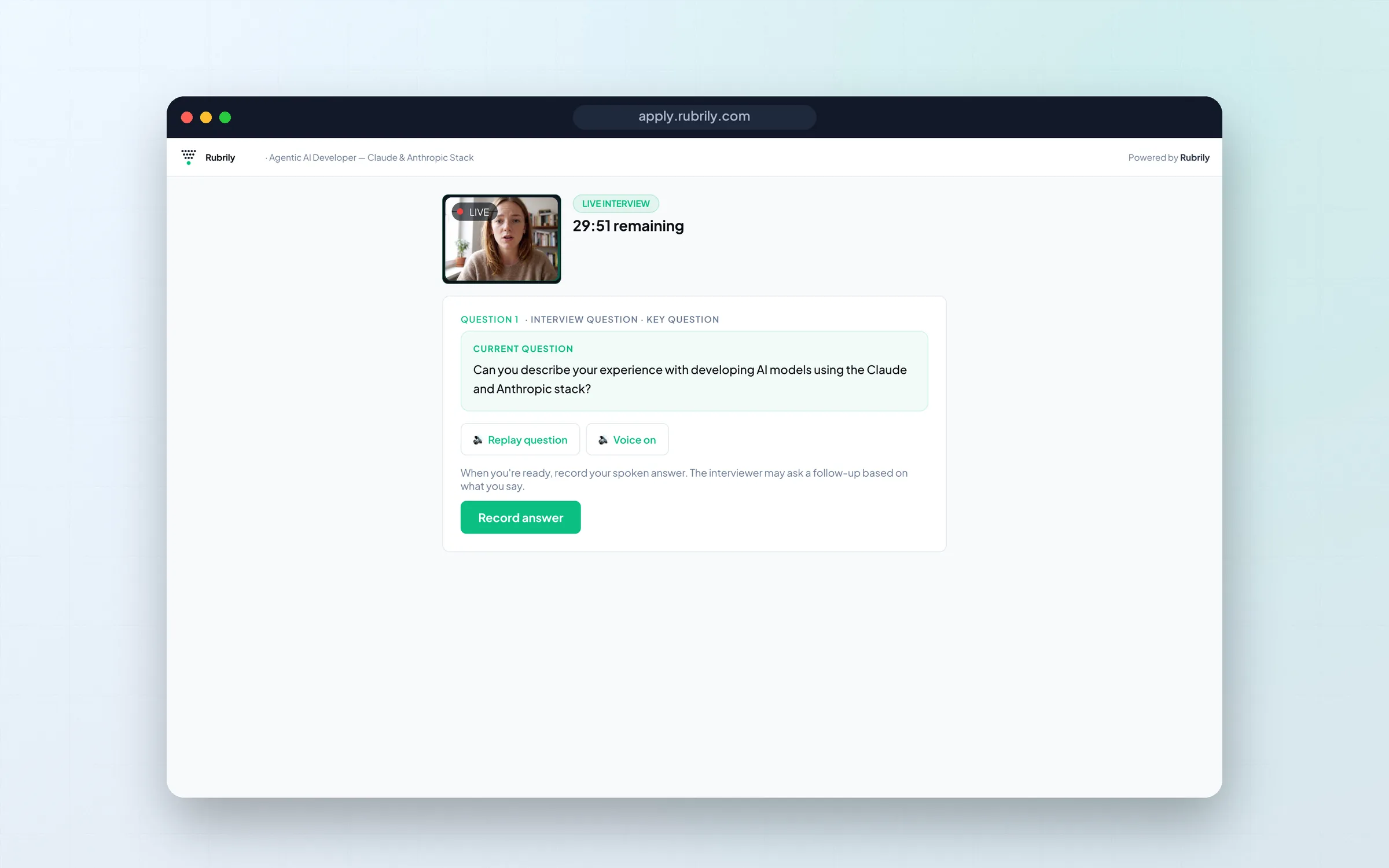
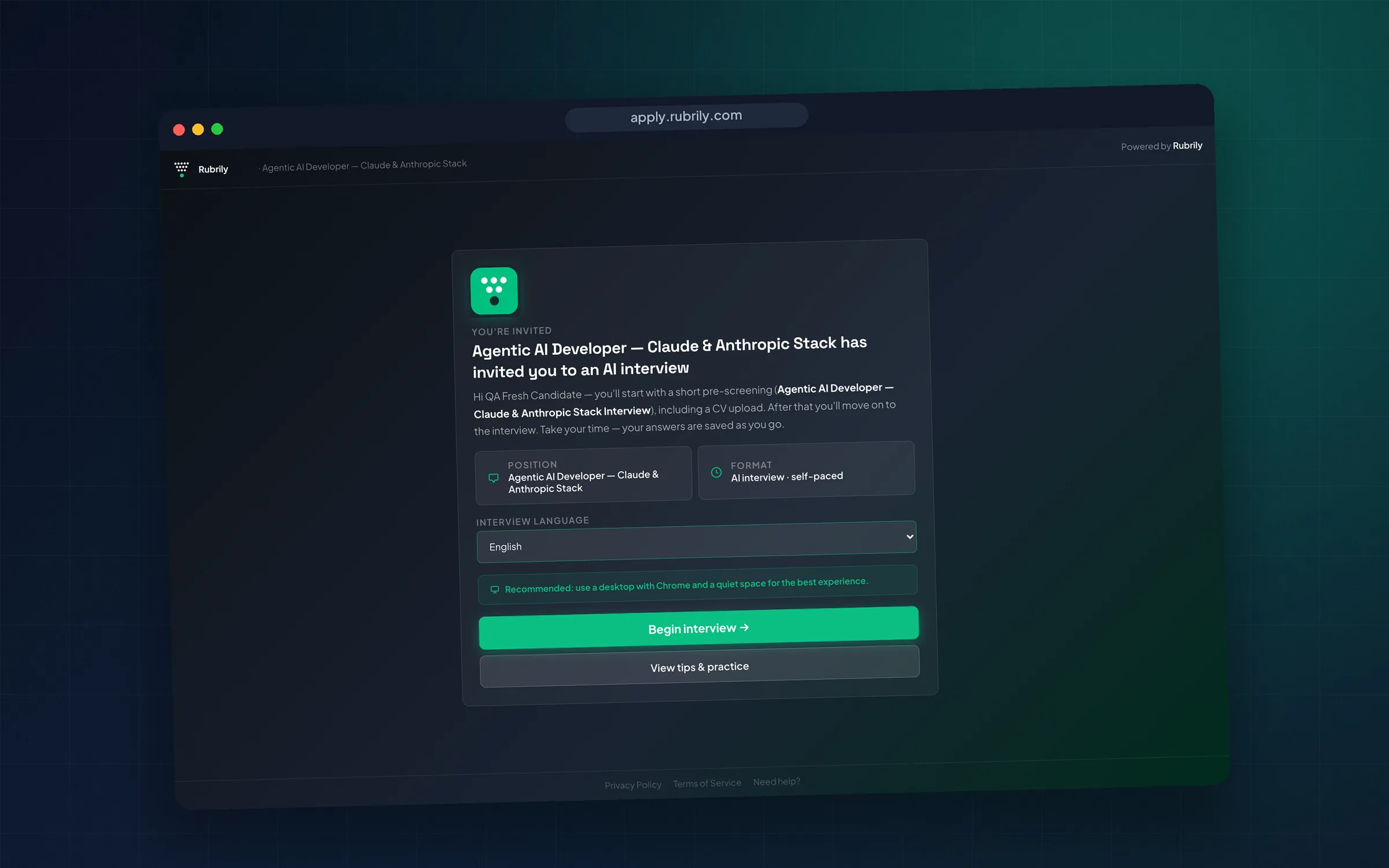
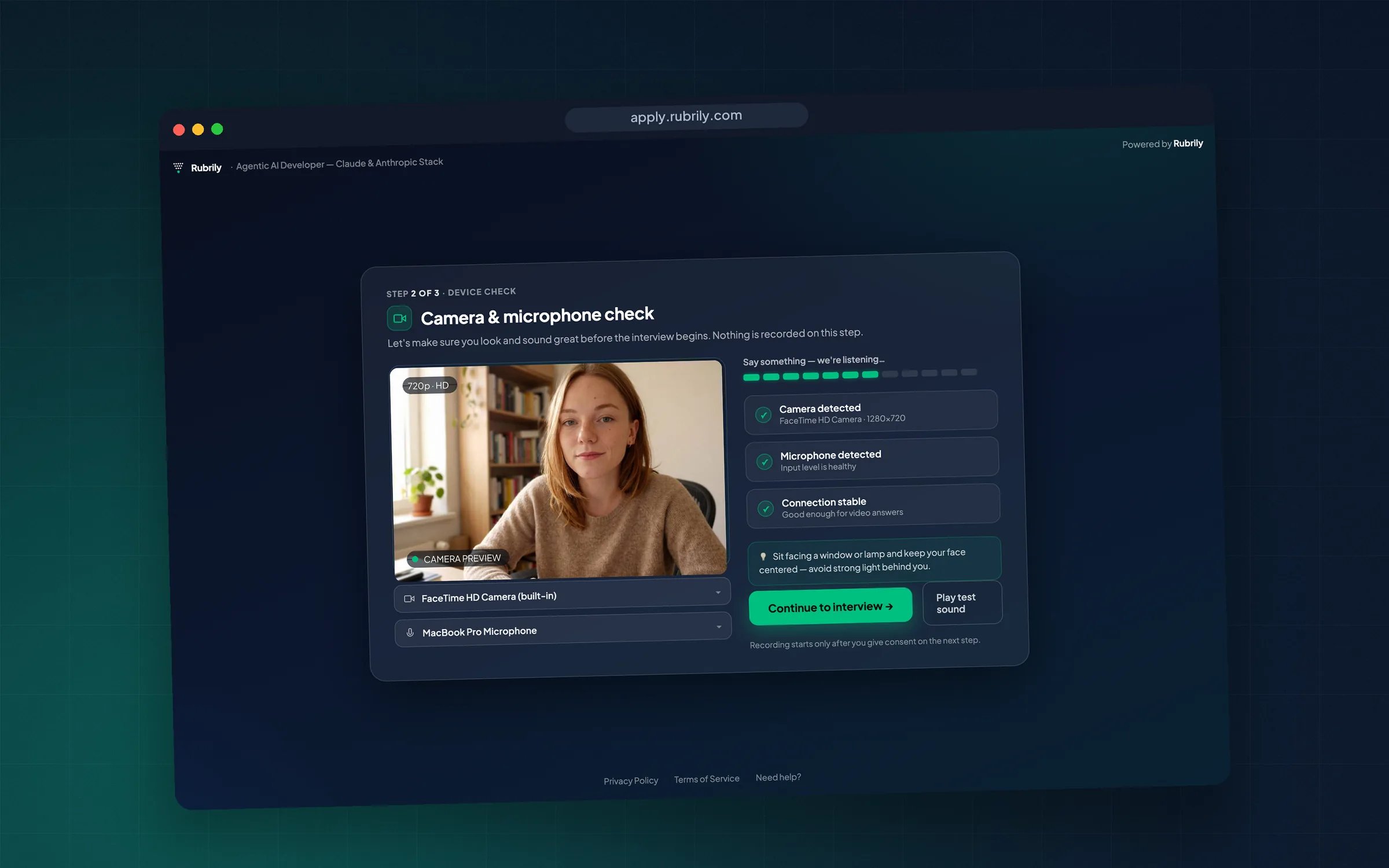
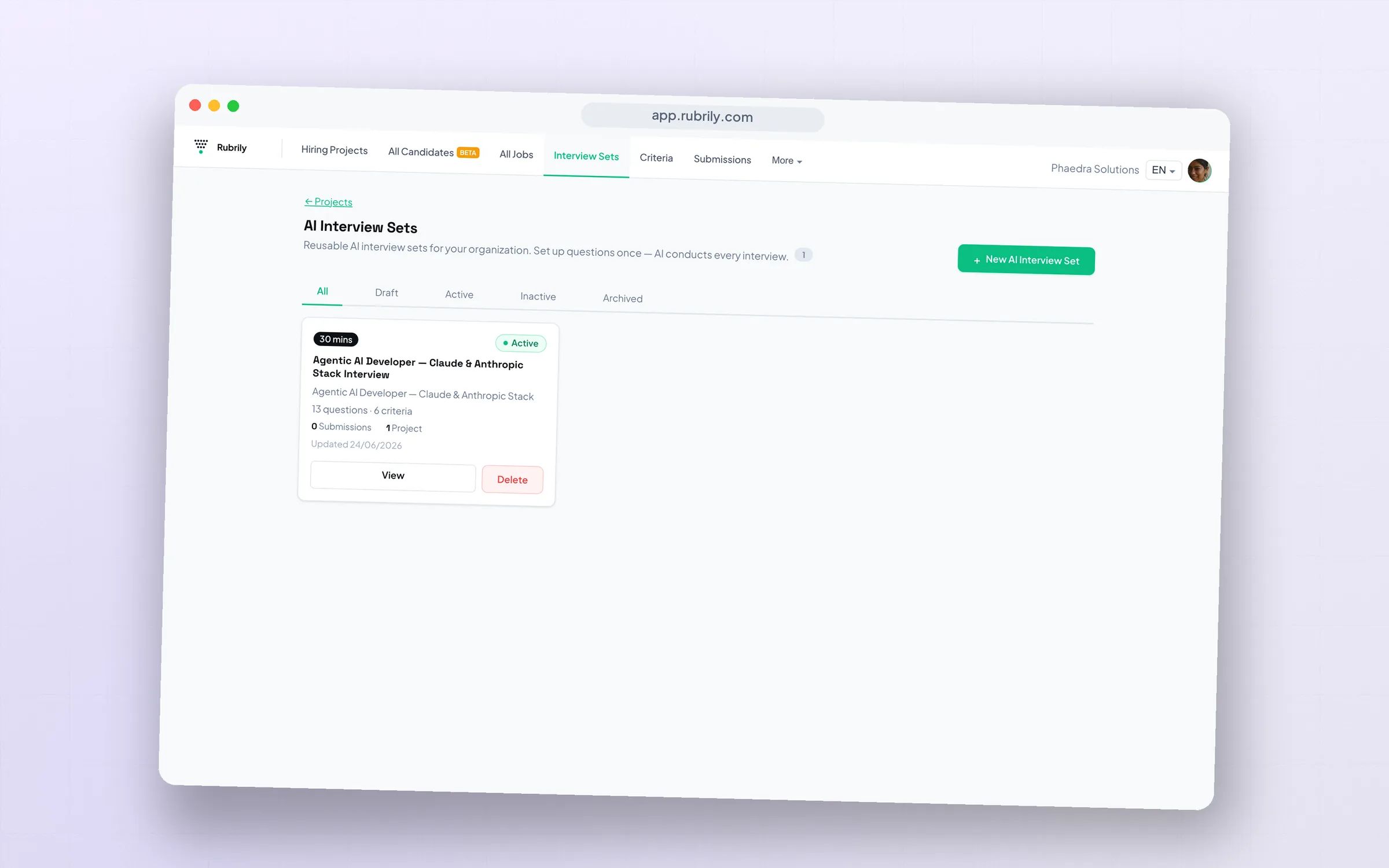
Define an interview set once: questions, duration, criteria. Every invited candidate gets a link and completes the interview on their own time, in their own language, with voice-narrated questions, spoken answers, and adaptive follow-ups based on what they actually say. Pre-screening questions and CV upload sit in the same flow, and integrity is protected with recording consent, tab-switch and face-visibility monitoring, and AI-answer detection.
Every answer is transcribed and scored against your rubric, with the recording one click away, so you can check any number against what the candidate actually said.
How do async AI interviews work?
You define the questions once; candidates receive a link and interview whenever they're ready, with no scheduling. The AI asks each question aloud, listens, and follows up adaptively. Answers are recorded, transcribed, and scored 0–10 per criterion with justification, so every candidate is assessed on the same rubric.
AI CV Evaluation
CVs read like a hiring manager would, at machine speed.
Link a criteria set to your project and every CV is evaluated against it: a 0–10 score per criterion with evidence-cited justification, document-quality signals, and red flags. Upload one CV or bulk-evaluate up to 30 at once; each auto-creates a candidate and lands ranked in your list.
How is this different from a keyword ATS?
A keyword ATS counts term matches; Rubrily evaluates meaning. The AI reads each CV against your weighted criteria and writes a justification for every score, citing what it found. Candidates who phrase experience differently aren't filtered out by vocabulary, and you can audit exactly why anyone ranked where they did.
Fit Score
One score you can defend.
Weight the CV evaluation against the interview (50/50, 70/30, whatever fits the role) and every candidate gets a blended Fit Score from 0–100%. It’s not a black box: every Fit Score decomposes into its components, criteria, and written justifications. And when there isn’t enough signal, the answer is “Cannot evaluate,” never a made-up number.
Pipeline (ATS)
A pipeline your whole team can work.
Kanban board with configurable stages, drag-and-drop candidates, list view with sort-by-Fit, per-candidate comments and 0–10 team ratings, full activity history, and auto-send emails that fire when a candidate enters a stage (immediately or delayed). The org-wide talent pool keeps every candidate you’ve ever assessed searchable, with per-candidate discoverability controls. Analytics show funnel, assessment completion, and time-in-stage, so the bottleneck shows up as a number, not a surprise.
Job Posts & Careers
Sourcing that flows straight into screening.
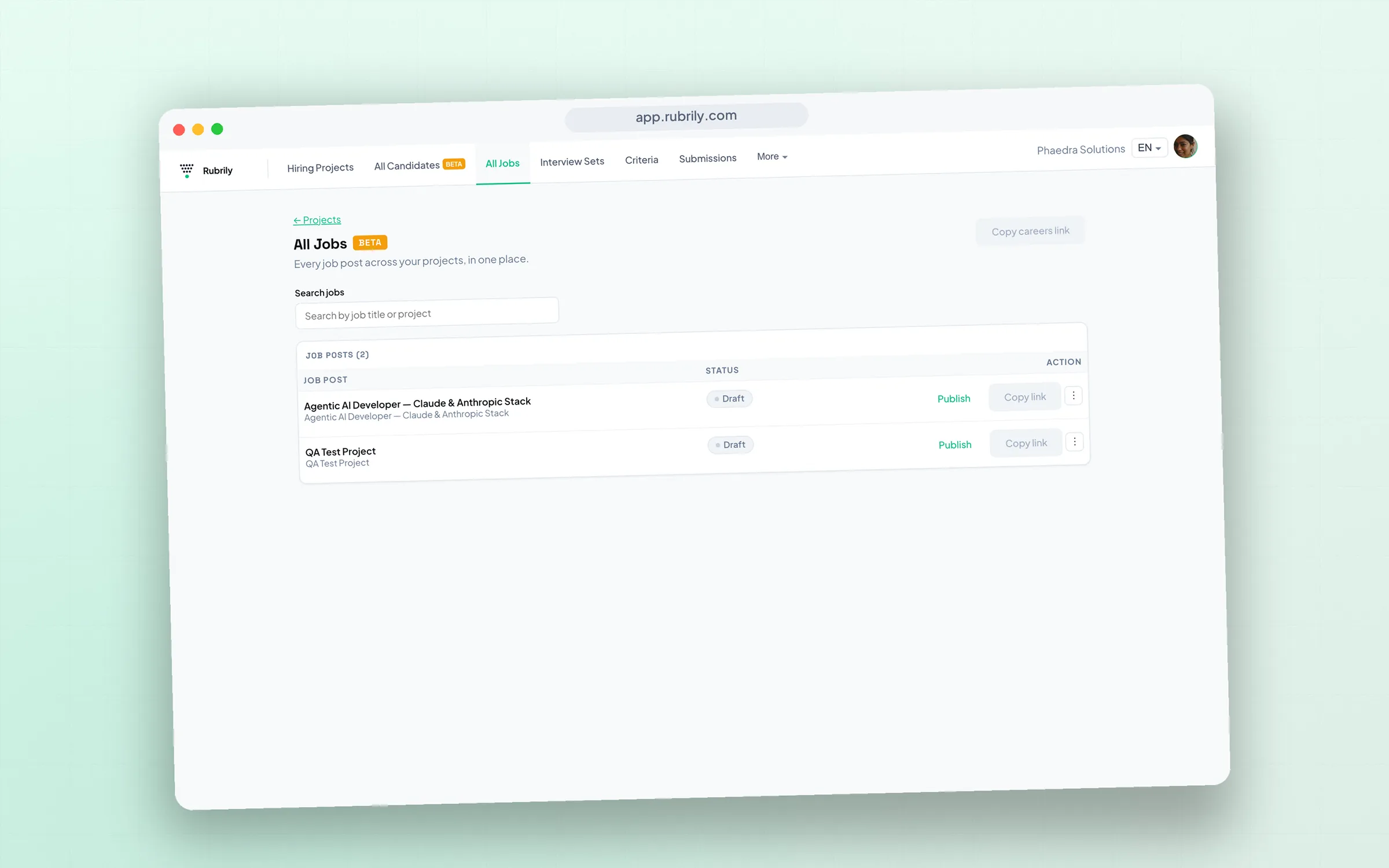
Compose a branded job post with quick facts and pre-screening questions, publish it to your own careers page, and share or Boost the link. Applicants can be auto-invited into the AI interview the moment they apply, so sourcing, screening, and scoring happen in one motion, and Matched Talents (BETA) resurfaces strong past candidates for new roles.
Frequently asked questions
Can I customize pipeline stages?
Does Rubrily send emails automatically?
What languages do candidates get?
What is Matched Talents?
See it with your own role.
Create a hiring project, paste your job description, and watch the AI build the screen.
No credit card. First candidate screened in minutes.