
AI CV Evaluation
AI CV screening that reads, not keyword-matches
The career-changer your keyword filter would reject scores 8/10 here, with the evidence cited. Every CV read against your weighted rubric, every score justified in writing.

What is AI CV screening?
AI CV screening is the evaluation of CVs by AI against defined role criteria instead of keyword filters. Rubrily reads each CV's meaning, scores every criterion 0–10 with an evidence-cited justification, surfaces strengths and red flags, and ranks candidates by the result.
Rubric vs. keyword filtering
Is it keyword matching?
No. Keyword ATSs count term matches, so candidates who phrase experience differently get filtered out and keyword-stuffed CVs get through. Rubrily evaluates meaning against your weighted criteria and writes a justification for every score: a career-changer with real skills scores well; buzzword padding doesn’t.
| Dimension | Keyword ATS filter | Rubrily rubric evaluation |
|---|---|---|
| Reads | Term frequency | Meaning, in context |
| Misses | Synonyms, phrasing, career-changers | Nothing; it evaluates the substance |
| Gamed by | Keyword stuffing | Nothing to stuff; evidence is cited |
| Output | Pass/fail, unexplained | 0–10 per criterion + written justification |
| Auditable | No | Every score traceable to evidence |
What every evaluation contains
Per criterion: a 0–10 score, the tier-weighted contribution, and a written justification citing the CV, so you can check any number against the document in seconds. Overall: a 0–10 score with narrative justification, plus Strengths, Gaps, and Recommendations tabs, document-quality signals, and red flags worth a human look. No usable CV? The panel degrades honestly to “Cannot evaluate,” never a made-up number.
What is a scoring justification?
A justification is the written reason behind each score: what the AI found in the CV, measured against your criterion. It’s how you audit the ranking: read the justification, check it against the CV, and you know whether to trust the number. Every score has one.
Built for volume
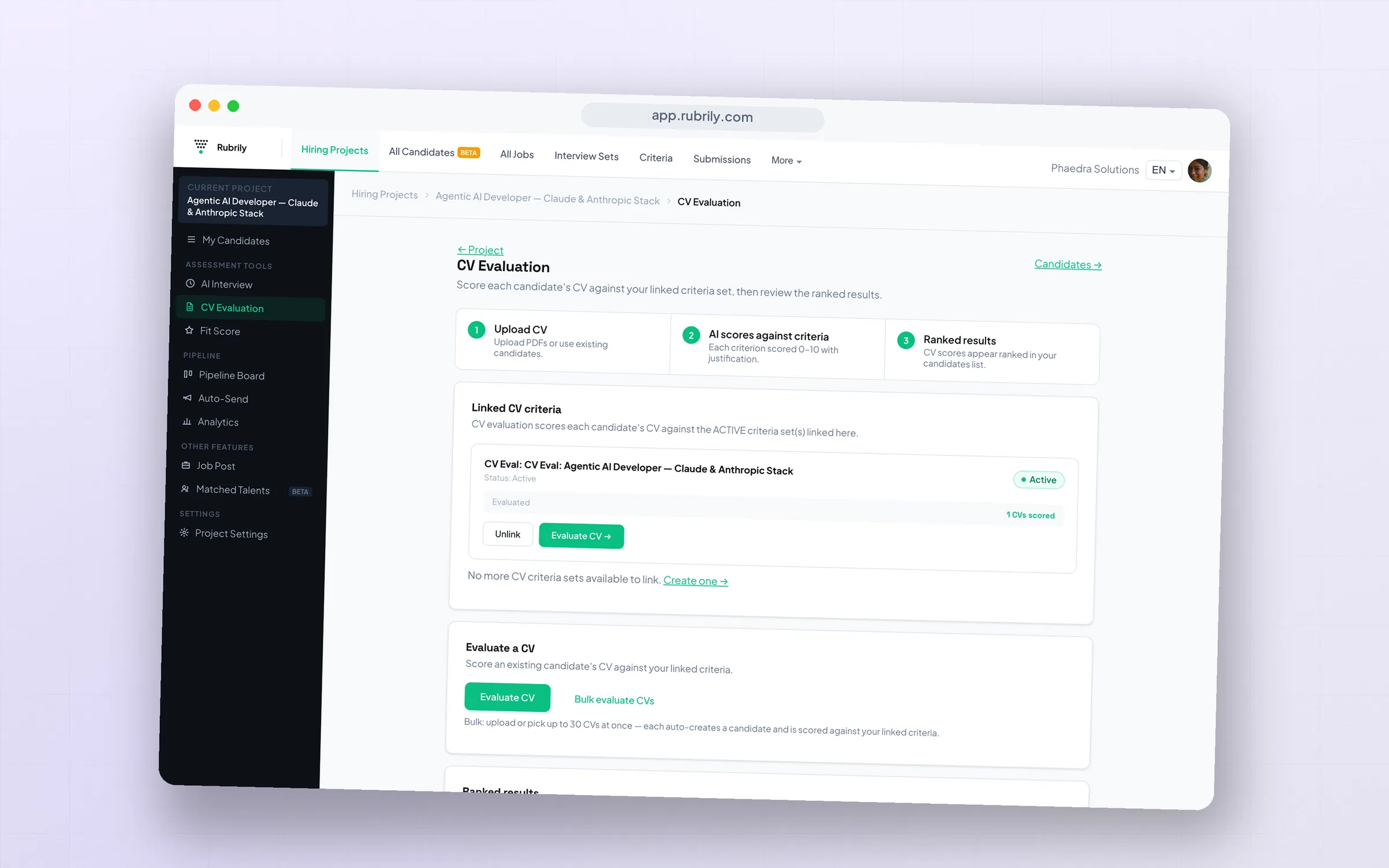
Evaluate one CV or bulk-evaluate up to 30 at once; each upload auto-creates a candidate, scores them, and ranks them in your project. Criteria sets are reusable across roles, and every CV score feeds the blended Fit Score, so the ranking reflects the whole candidate, not just the paper.
How is a CV scored?
The AI reads the CV against your weighted criteria, not a keyword list. Every criterion gets a 0–10 score with an evidence-cited justification, rolled up through your weight tiers into an overall CV score, which then blends with the interview into the candidate’s Fit Score.
Frequently asked questions
What file types can candidates upload?
Can I evaluate CVs I already have?
What happens with a bad or empty CV?
Do CV scores affect the Fit Score?
Want the method without the product yet?
Grab the free hiring rubric template: weighted criteria, 0–10 scorecards with required justifications, automatic ranking.
Get the templateWorks with