
Skip to content
Rubrily
Recruiter reviewing a candidate report with a 92% Fit Score in Rubrily at her desk.
92% · Strong

The rubric-first ATS

Your best candidate is buried in a pile you’ll never finish reading.

Rubrily reads it all. Every applicant interviewed by AI, every CV scored against your rubric. Monday’s pile becomes Friday’s ranked shortlist, with the reasons written down. Free, for unlimited candidates.

Early access ships in small batches with concierge setup: a human helps you build your first rubric.

Unlimited candidates · No credit card · Every score explained · See how it works

  • GDPR-ready
  • Your data isolated
  • No fabricated scores

Screen every applicant, not the first 50

Zero scheduling: interviews run async

Every score explained, per criterion

300 applicants is a week of unpaid reading. So nobody reads it.

Five minutes per CV × 300 applicants = 25 hours, before a single interview. So the honest version of most screening is: read until you’re tired, gut-feel the rest, hope. The candidate who would have changed your quarter doesn’t stop applying at CV #50. But that’s where most screens stop.

A tall stack of unread CVs under a desk lamp late at night, hands leafing through the pages.

Evenings disappear into the pile

Screening happens after real work, which is why it happens badly.

Candidate #200 isn’t judged like candidate #7

Fatigue rewrites your standards by the hour. Nobody’s #200 gets a fair read.

“Why these five?” has no answer

If the shortlist can’t be defended in writing, it’s a feeling. And feelings get challenged.

What is Rubrily?

Rubrily is a rubric-first applicant tracking system: it screens candidates with async AI interviews and AI CV evaluation, scores both against your custom weighted rubric, and blends them into a single Fit Score. Built by Phaedra Solutions, it’s free for hiring teams: unlimited candidates, interviews, and CV evaluations.

From pile-reader to decision-maker.

Night: a pile of printed CVs under a desk lamp, still unread.

The week you know

  • Skim the first 50
  • Schedule ten screening calls
  • Gut-rank from memory
  • Defend nothing
The morning after: the same desk, calm, with the laptop showing a ranked candidate shortlist in Rubrily.

The week with Rubrily

  • Every applicant interviewed and scored, same rubric
  • Shortlist ranked 0–100% with written justifications
  • Your calendar holds finalists only
  • “Why these five?” has a printable answer

Same job post. Same applicants. A different Friday.

How AI screening works in Rubrily

You define what a great hire looks like as weighted criteria; the AI interviews every candidate async and reads every CV against those criteria; each candidate gets per-criterion scores with justification, blended into one Fit Score that ranks your pipeline. You start with the shortlist, not the stack.

Step 1

Define what “great” means.

Set weighted, tiered criteria (Must Have → Good to Have) once: one rubric drives both interview and CV scoring. Candidate #200 gets judged by the same bar as candidate #7.
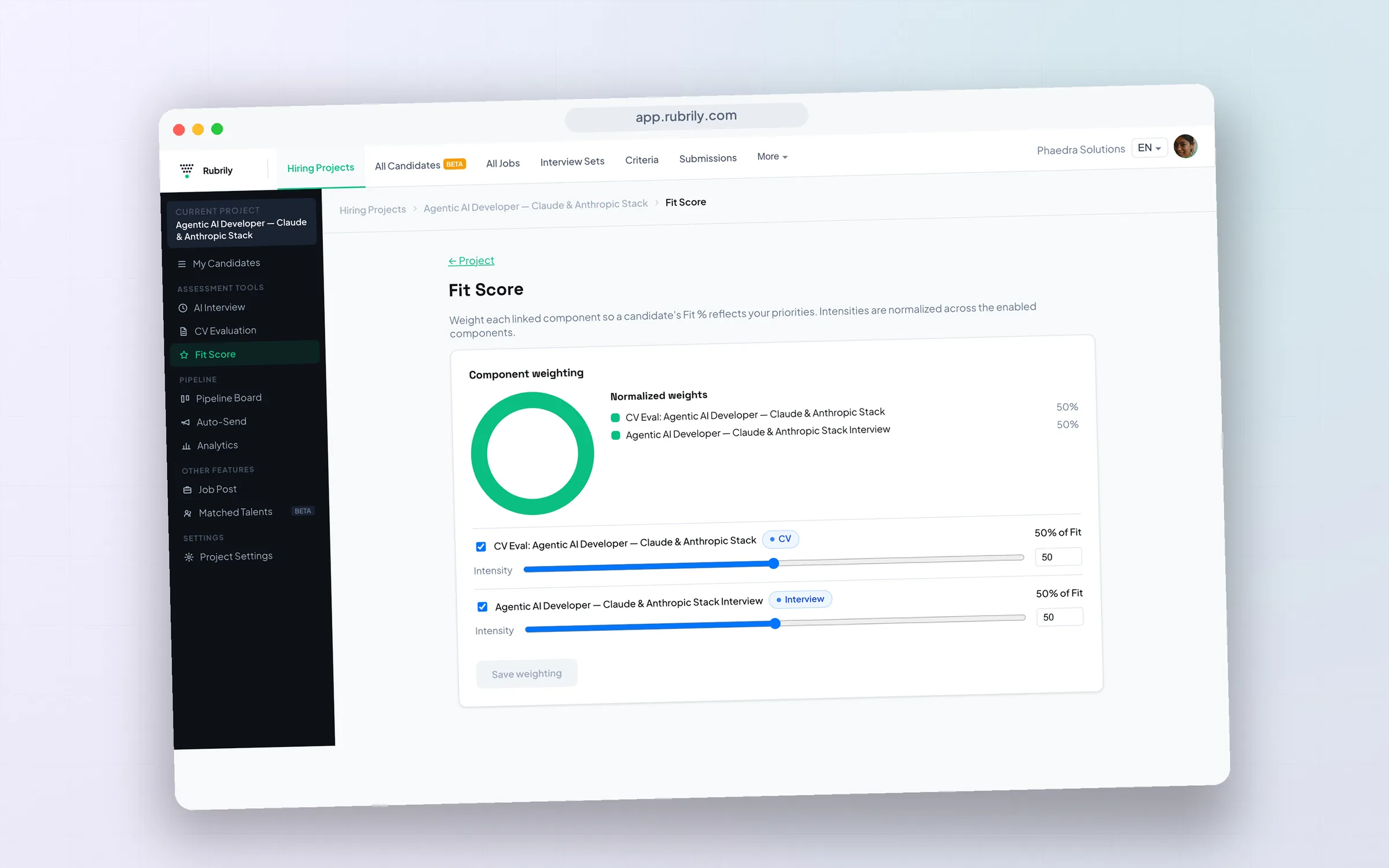
Fit Score configuration weighting CV evaluation and interview scores into one blended ranking.

Step 2

AI screens every candidate.

The AI interviews every applicant async (no scheduling, any language, adaptive follow-ups) and reads every CV against your rubric. Nobody goes unread, and your calendar stays yours.
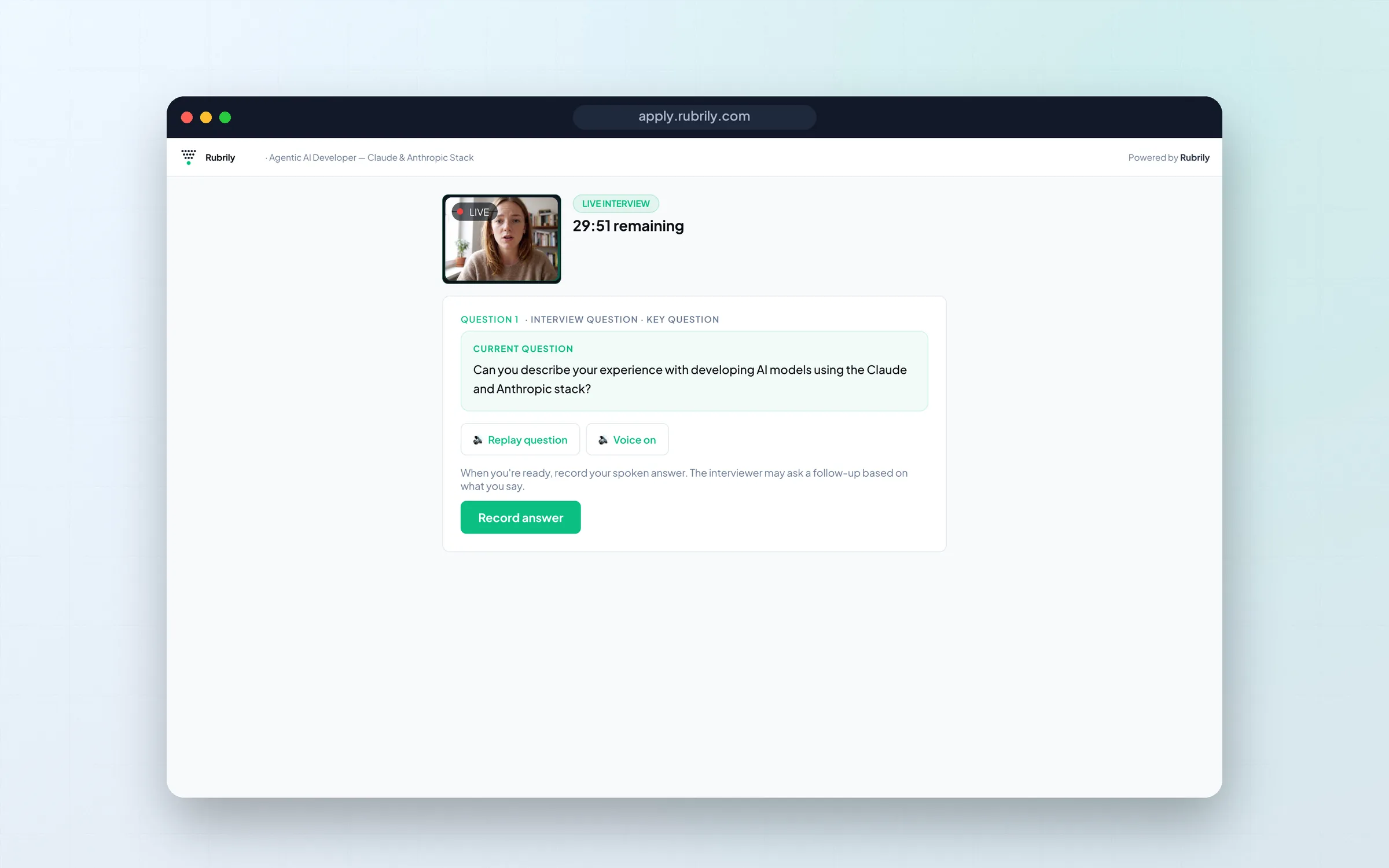
Rubrily live AI interview asking a candidate a question with a Record answer button.

Step 3

You review the ranked shortlist.

One blended Fit Score ranks your pipeline; every number opens into criteria, justifications, transcript, and recording. Your week starts at the shortlist, deciding between finalists.
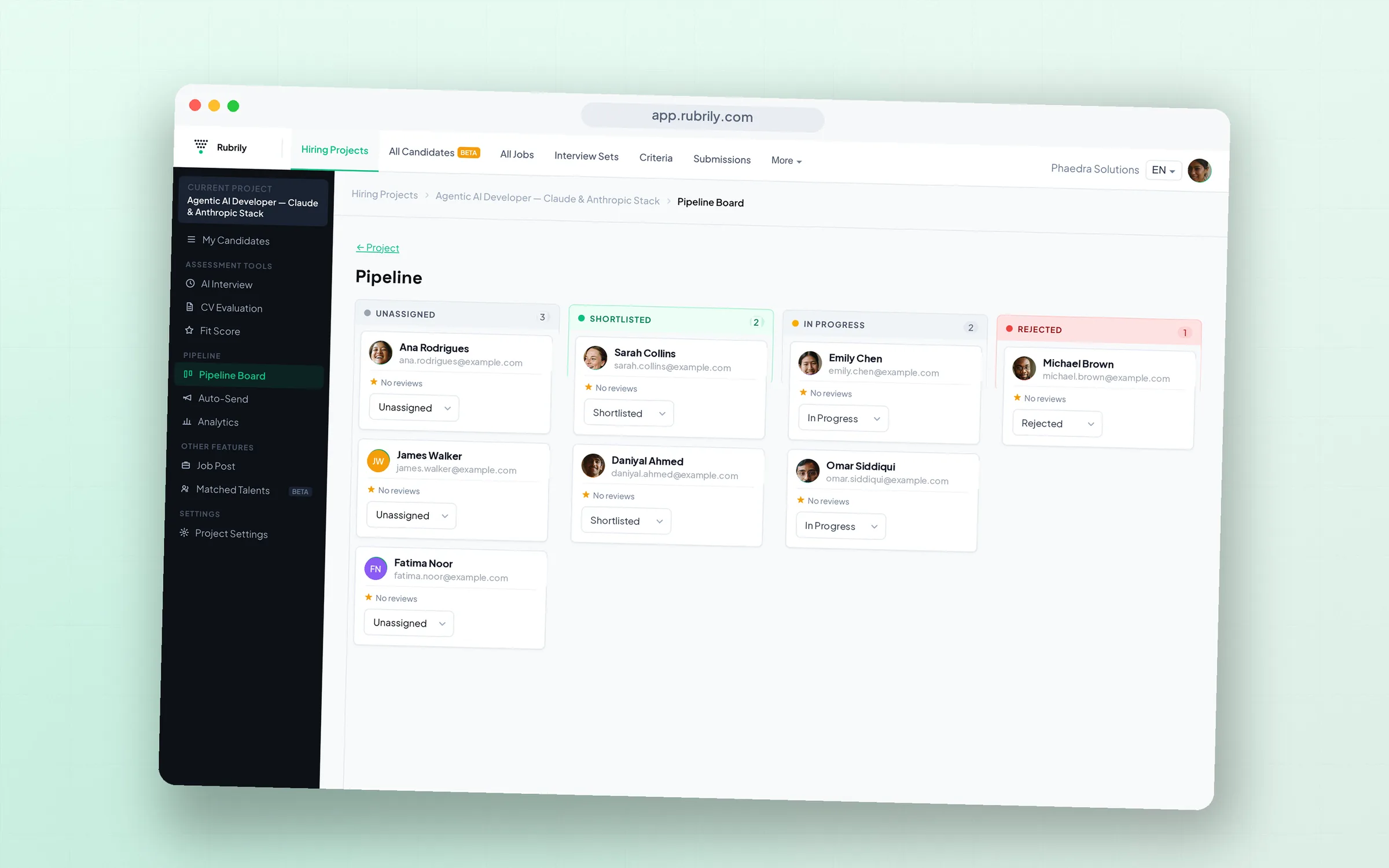
Hiring pipeline Kanban board with candidates in Unassigned, Shortlisted, In Progress and Rejected stages.

Built for the person whose name is on the shortlist.

A founder sketching a hiring plan on a whiteboard in a small startup office.

Founders

Hiring without a recruiter? Run recruiter-grade screening with a team of zero.

A recruiter on a call, reviewing a printed shortlist report with score bars.

Agencies

Send clients evidence, not vibes: scored, client-safe candidate reports.

A talent team standup at a wall of candidate cards in a bright office.

Talent teams

Screen 1,000 applicants without burning out: every one on the same rubric.

AI explainability

Every score, explained.

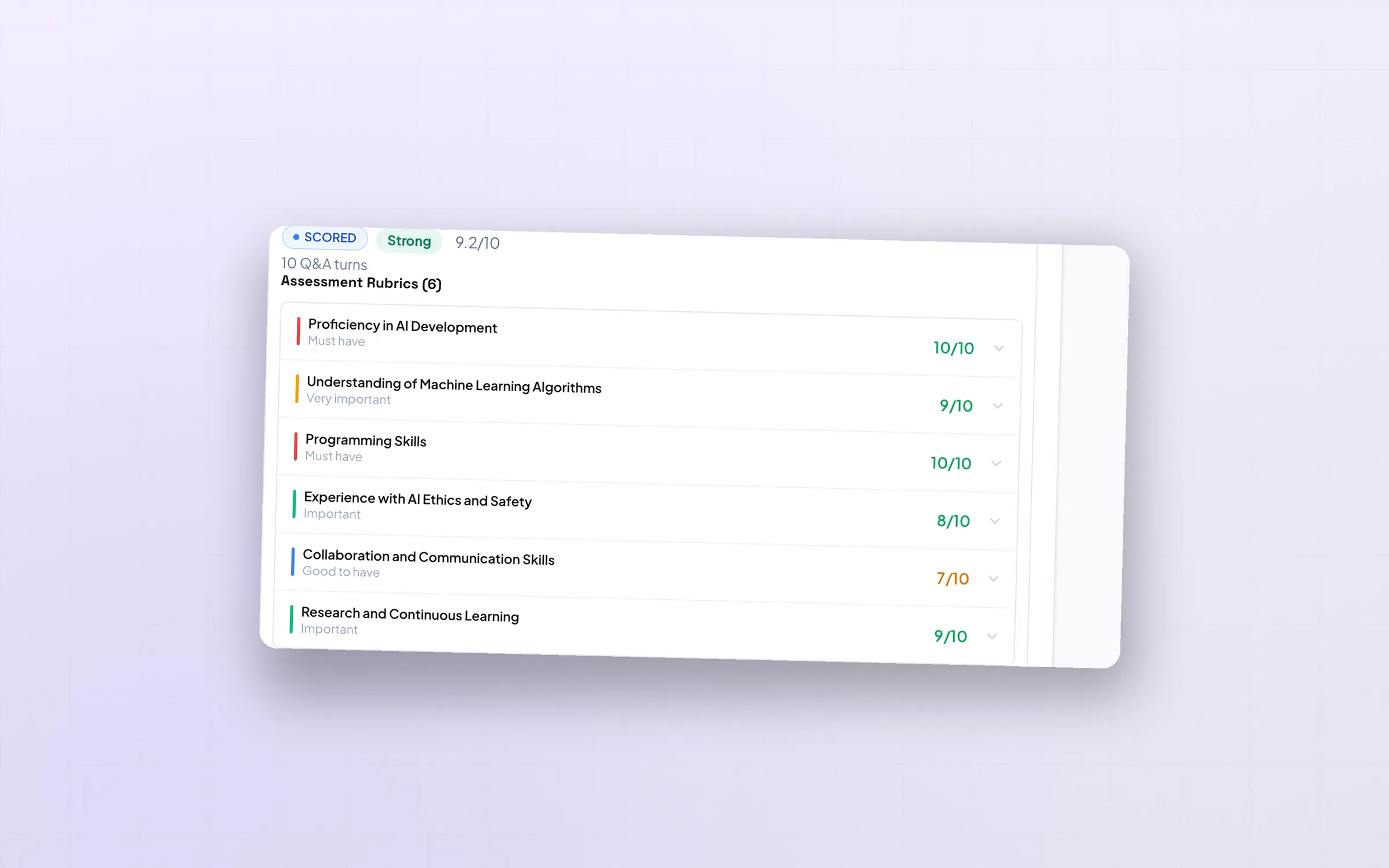
No black boxes: each criterion gets a 0–10 score with written justification you can audit, plus an AI summary of strengths, gaps, and recommendations. The full transcript and recording are one click away. And when there isn’t enough signal to judge, Rubrily says “Cannot evaluate”. We never fabricate a score.

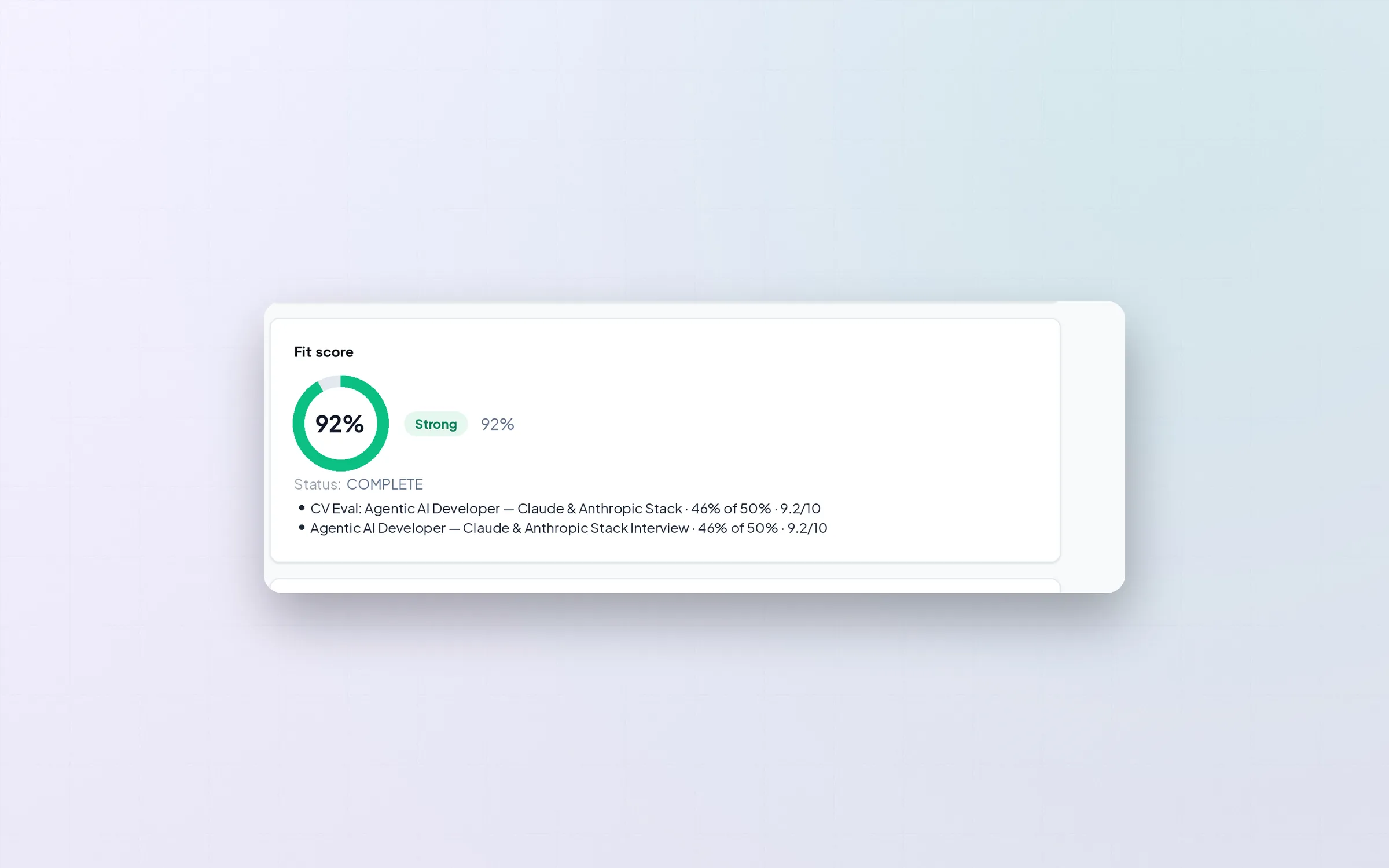
92%

Fit Score

Close-up of per-criterion rubric score bars with justifications from a Rubrily candidate report.Close-up of the Fit Score gauge blending weighted CV and interview scores.

Every score has a rubric behind it.

AI Interviewer

Set your questions once. AI conducts every interview.

The AI interviews candidates async and intelligently follows up on what they say. Candidates answer on their own time, in their own language, with pre-screening and CV upload built into the same flow. Every answer is scored against your criteria.

Learn more
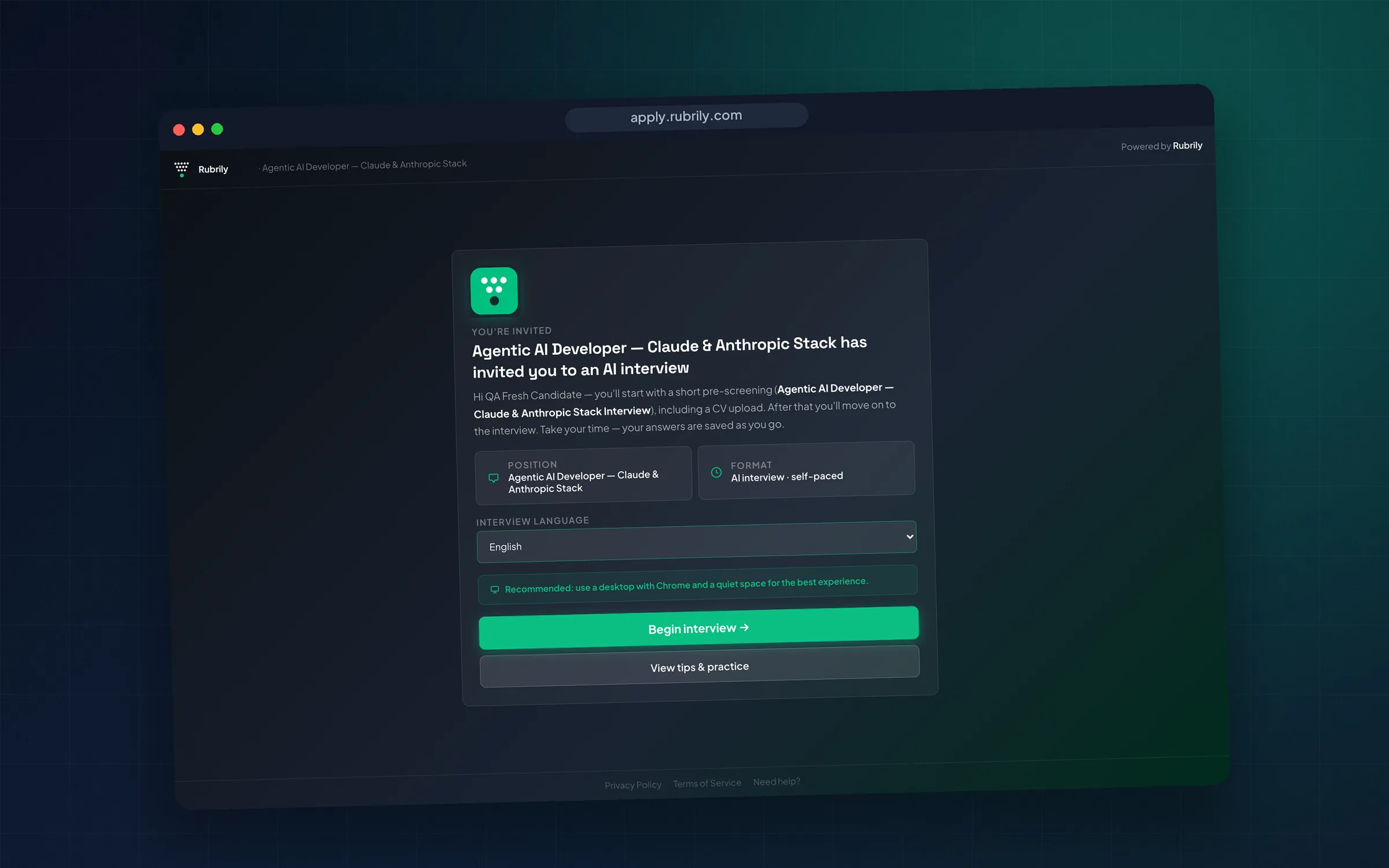
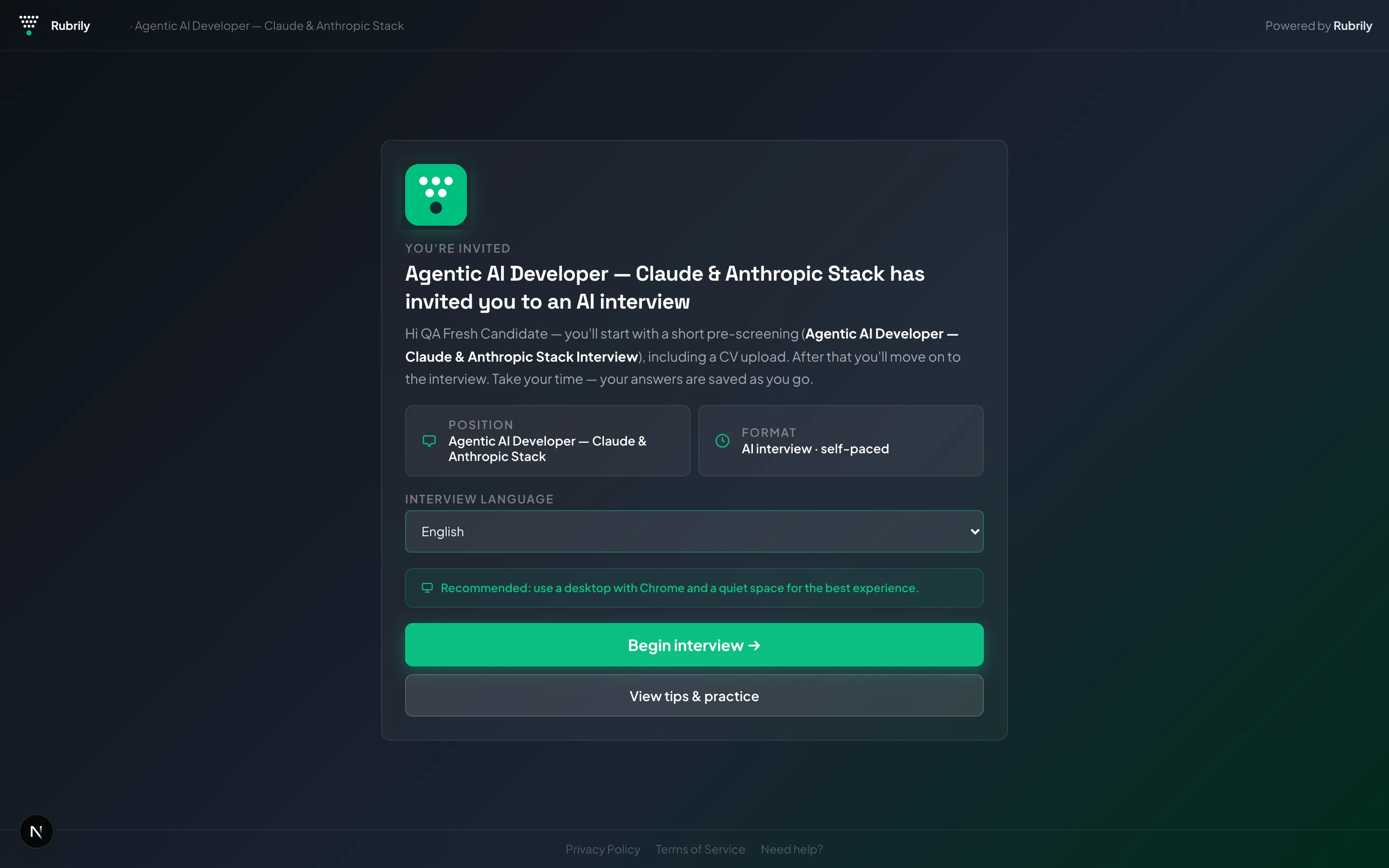
Candidate interview invitation in the Rubrily candidate portal with position, format, and language options.

A complete ATS

Your whole hiring flow, not just a screener.

Kanban pipeline with configurable stages, drag-and-drop, comments and ratings, auto-send stage emails, org-wide talent pool, and analytics: hiring projects from posting to offer in one place.

Learn more
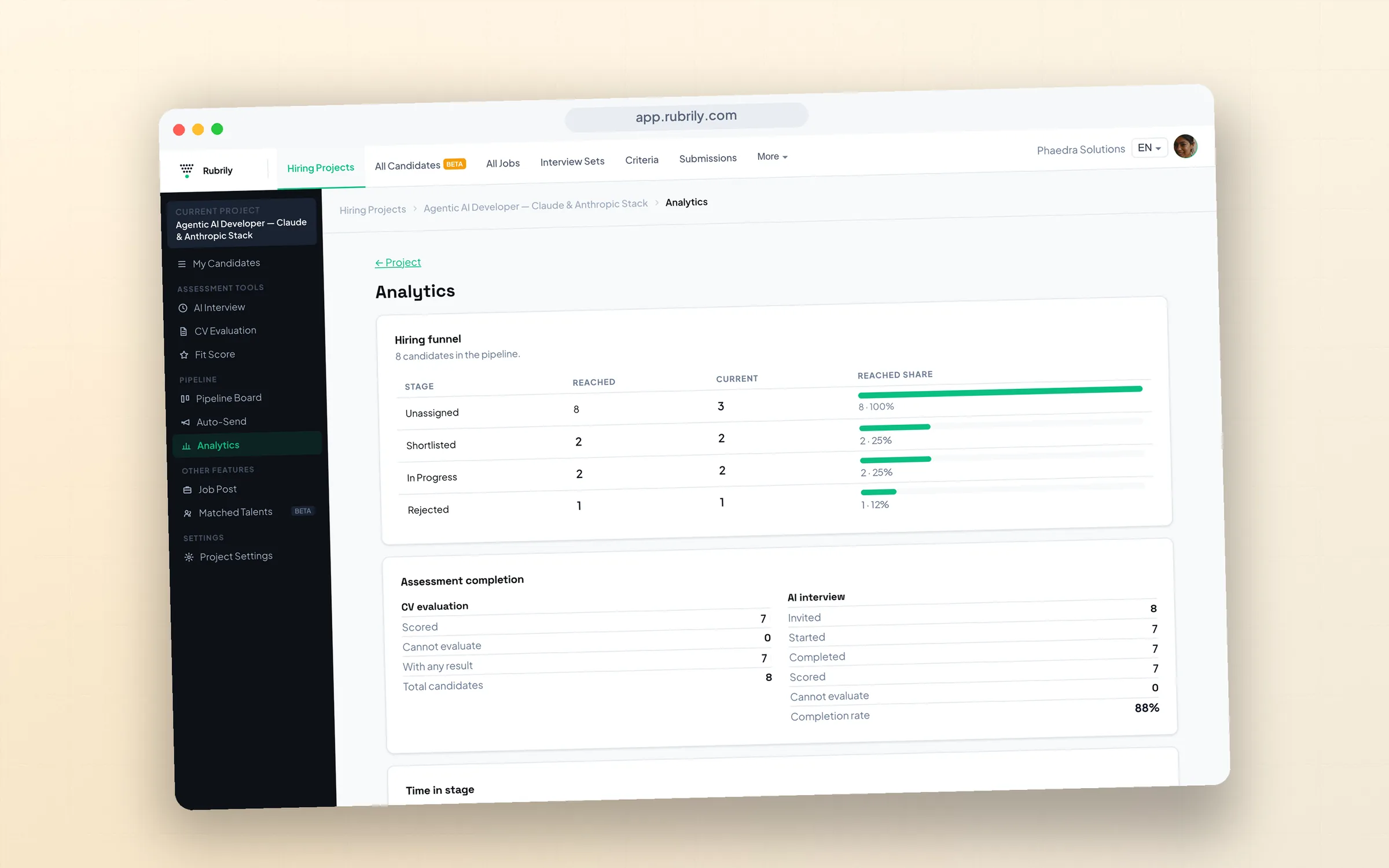
Rubrily analytics dashboard for hiring projects.

AI CV Evaluation

It reads the CV. It doesn't keyword-match it.

Every CV is evaluated against your weighted rubric with a 0–10 score per criterion, plus evidence-cited justification, strengths, and red flags. Bulk-evaluate up to 30 CVs at once; each ranks automatically.

One Fit Score

CV + interview, weighted your way.

Blend CV and interview scores with weights you control. One number to rank by, fully traceable to every criterion, answer, and justification underneath it.

Sourcing & careers

Publish once, source everywhere.

Spin up a branded job post and careers page with pre-screening and auto-invite to the AI interview. Boost posts into the Rubrily network, and surface Matched Talents (BETA) from candidates already in your org.

A fairer process for candidates, too.

No scheduling ping-pong, questions in their own language, time to think, and the same rubric applied to everyone.

For candidates

apply.rubrily.com
Candidate interview invitation in the Rubrily candidate portal with position, format, and language options.
Candidate reading his Rubrily interview invite on his phone in a café.
apply.rubrily.com
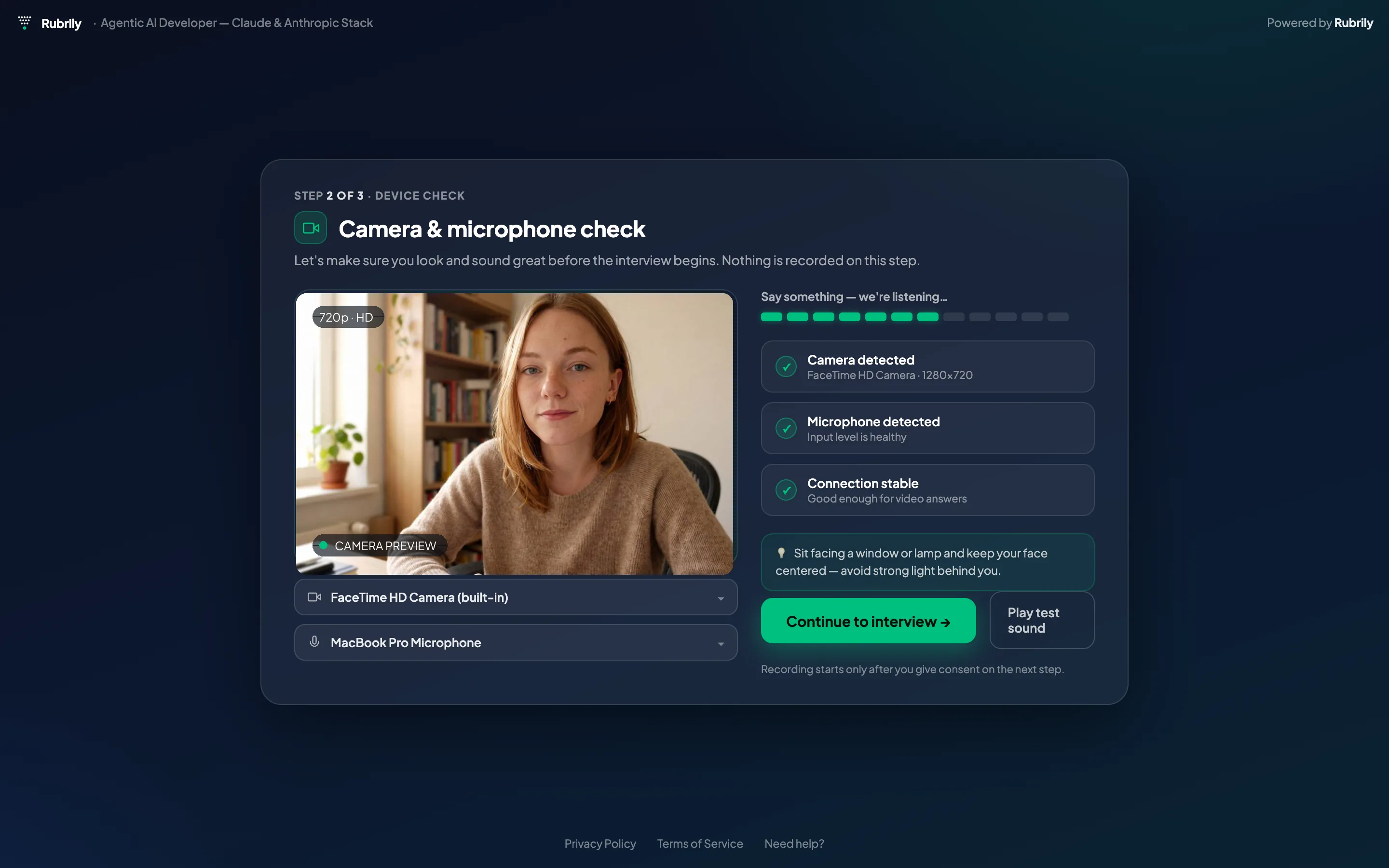
Rubrily device check confirming camera and microphone before an AI interview.

0–10

per-criterion scores with written justification

0–100%

one blended Fit Score ranks candidates

Up to 30

CVs bulk-evaluated at once

Free isn’t a trial here. It’s the business model.

  • Unlimited candidates
  • Unlimited AI interviews
  • Unlimited AI CV evaluations
  • Full pipeline, careers page, email templates

$0. No credit card. No per-candidate meter.

Optional candidate-side add-ons fund the product, and you can switch them off for your projects. Hiring teams are never the meter.

Keep your process. Rubrily replaces the manual filtering layer, not your judgment. Setup is one afternoon.

Get free early access

Proof, before the logos.

We’re pre-launch: no customer logos yet. Judge us on what you can verify today.

Built by Phaedra Solutions

An award-winning software & AI development company.

The method is public

How every score is computed is documented, down to the rubric template you can take for free.

How the Fit Score is computed

The receipts are in the product

Click any score: 0–10 per criterion, written justification, transcript one click away.

It admits what it can’t judge

Missing evidence returns “Cannot evaluate”, never an invented number.

Frequently asked questions

What is a rubric-first ATS?
A rubric-first ATS starts from your hiring rubric (the weighted criteria that define a great hire for the role) and scores every candidate against it. In Rubrily, the AI interview and the CV evaluation each score every criterion 0–10 with a written justification, so every ranking traces back to evidence instead of a black-box match score. Read the full definition in our guide: what is a rubric-first ATS?
What is an AI ATS?
An AI ATS is an applicant tracking system where artificial intelligence does the screening work (interviewing candidates, evaluating CVs, and scoring both) instead of only storing applications. Rubrily is the rubric-first kind: every score is produced against your weighted rubric, carries a written justification you can audit, and the AI says "Cannot evaluate" rather than guessing.
How does the AI interview work?
You pick the questions once; the AI conducts every interview asynchronously. Candidates open a link, answer by voice on their own time, and the AI asks adaptive follow-ups based on what they say. Every response is transcribed, scored against your rubric, and recorded for your review.
Can the AI ask follow-up questions?
Yes. The AI interviewer adapts to each candidate's answers with intelligent cross-questioning, probing deeper on what they actually said rather than reading a fixed script. That keeps interviews comparable across candidates while still reacting to each individual conversation.
How is a CV scored?
The AI reads each CV against your weighted criteria, not a keyword filter. Every criterion gets a 0–10 score with a written, evidence-cited justification, plus overall strengths and red flags. Scores feed the candidate's Fit Score and rank them automatically in your list.
What is a Fit Score?
A Fit Score is a single 0–100% score that blends a candidate's CV evaluation and AI-interview results, weighted however you choose. It's fully traceable: click into any Fit Score to see the component scores, per-criterion breakdown, and the justification behind every number.
What happens when the AI can't evaluate something?
It says so. When there isn't enough signal (a missing CV section, an unanswered question), Rubrily returns "Cannot evaluate" for that criterion instead of guessing. We never fabricate a score, so every number you rank by is one the AI could actually justify.
Do candidates need to schedule an interview?
No. Interviews are fully asynchronous: candidates receive a link and complete the interview whenever it suits them, in their preferred language. There's no calendar coordination for your team, which is how one recruiter can screen hundreds of applicants in days instead of weeks.
Do I need a credit card to start?
No. Rubrily is free for your whole team: unlimited candidates, interviews, and CV evaluations. We're in pre-launch, so join the waitlist and you'll get access the moment your workspace is ready, no credit card and no trial clock.
What's the catch with free?
There isn't one to find: screening is free because optional candidate-side add-ons fund the product, and you can disable those for your projects. No credit card, no trial clock, no per-candidate meter.
Won't candidates hate an AI interview?
Bad AI interviews deserve hate. Rubrily's are consent-first with a free practice run, answered on the candidate's own schedule in their own language. And every applicant gets read, which beats being applicant #201 in a pile nobody opens.