
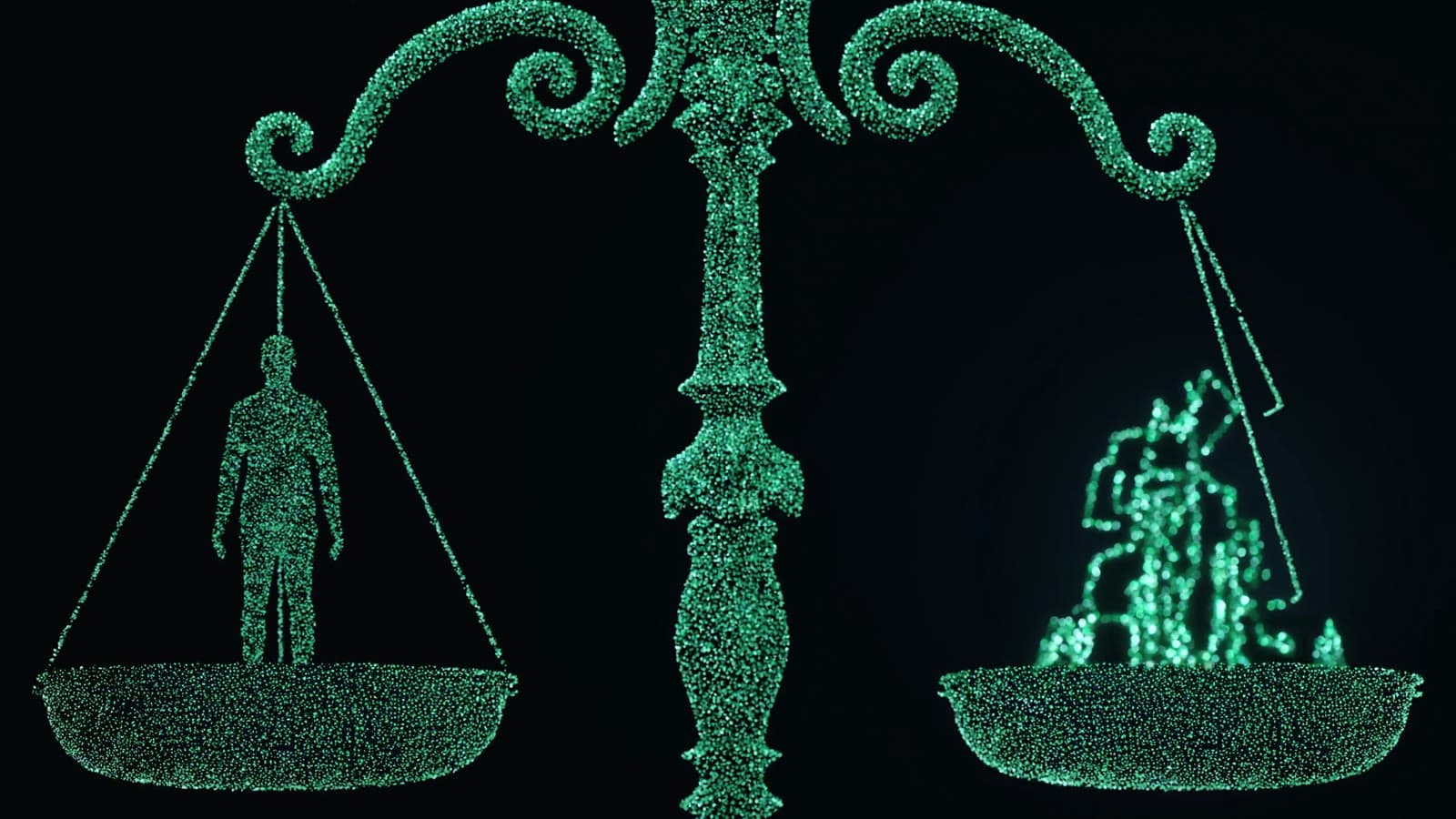
"AI hiring is biased" and "AI hiring fixes bias" are both bumper stickers. The research is more interesting than either. If you screen candidates with AI (we build a tool that does, so read us skeptically too), you owe it to your process to know what's actually been shown. Everything below is sourced and dated; the regulatory picture is as of July 2026 and moves fast, so verify before relying on it.
Start with the baseline: human hiring is measurably biased
Any claim about AI bias needs the comparison class. In the landmark Bertrand–Mullainathan field experiment (American Economic Review, 2004), fictitious resumes with white-sounding names received about 50% more callbacks than identical resumes with Black-sounding names; a white-sounding name was worth roughly eight additional years of experience. Two decades later, the largest audit study ever run (Kline, Rose, and Walters, 83,000+ applications to Fortune 500 companies; QJE, 2022; their 2024 AER follow-up graded 97 named employers) found Black-named applicants received about 2.1 percentage points fewer callbacks, with discrimination heavily concentrated: the worst fifth of firms accounted for roughly half of it. This is the system AI enters. The status quo is not neutral; it's just unaudited.
What the AI studies actually found
Trained on biased history, AI learns the bias. The canonical cautionary tale is Amazon's experimental resume-ranker (reported by Reuters, 2018): trained on a decade of male-skewed tech resumes, it penalized the word "women's" and downgraded graduates of women's colleges. Two details usually get lost: Amazon says the tool was never used for real hiring decisions, and it was killed because the bias was caught. It proves that naive training absorbs history, not that deployed AI made those decisions.
Modern results run in both directions, by model type. A University of Washington study (AIES 2024, 3M+ comparisons) found three open-source retrieval/embedding models favored white-associated names in 85% of tests and never preferred Black male names over white male ones. But large studies of frontier chat models found a different picture: a PNAS Nexus paper (2025, ~361,000 resumes across GPT-4o, Claude, Gemini, Llama) measured a small pro-female tilt and a modest penalty against Black male candidates; Rozado (PeerJ CS, 2026, 22 models) found all 22 favored female-named candidates. Tellingly, the same study found a positional bias (first-listed candidate wins 63.5% of the time) larger than the gender effect. The honest summary: bias in AI screening is real, model- and method-dependent, directionally inconsistent, and it includes arbitrary non-demographic quirks that pure "fairness" audits would miss.
"Human in the loop" is weaker than it sounds. A UW follow-up (AIES 2025) had 528 people screen candidates alongside AI recommendations: with unbiased AI, humans chose equitably; with severely biased AI, they followed it about 90% of the time. Oversight only works when the human can see and check the machine's reasoning. A rubber stamp inherits the bias it was supposed to catch.
Design can beat the baseline. Li, Raymond, and Bergman (Review of Economic Studies, 2025) tested an exploration-based screening algorithm on ~90,000 applications at a Fortune 500 firm: it raised the share of selected Black candidates to 14% and Hispanic candidates to 10% (versus ~2% and <5% under human recruiters and a standard supervised model), while more than doubling interview-to-hire quality. Same company, same applicants: the algorithm's design decided whether it entrenched bias or reduced it. Decades of I-O psychology point the same way for process design: structured, criteria-based interviews show smaller demographic gaps and higher validity than unstructured ones (why structure matters).
So does AI make hiring bias better or worse?
Neither, inherently. The evidence says bias follows design: models naively trained on historical outcomes reproduce them; systems built around explicit job-related criteria, with explainable per-candidate reasoning and genuine human review, can beat the human baseline, which is itself measurably discriminatory. The differentiator isn't "AI or not"; it's whether anyone can audit why each candidate scored as they did. The full argument is in our pillar on how AI scores candidates fairly.
The 2026 regulatory map (verify at time of reading)
NYC Local Law 144 (bias audits for automated hiring tools) has been in force since 2023, but a December 2025 State Comptroller audit found just two complaints ever received, and a FAccT 2024 study found only ~5% of examined employers had published audits. On the books, weakly enforced (so far). Illinois now has two live laws: the AI Video Interview Act (notice, consent, deletion rights) and, since January 1, 2026, HB 3773, under which AI discrimination in employment decisions violates the Human Rights Act, zip-code proxies are banned, and notice is required. Colorado's famous AI Act never took effect: it was repealed and replaced (May 2026) by a disclosure-based law effective 2027 that drops the algorithmic-discrimination duties. The EU AI Act still classifies hiring AI as high-risk, but the Digital Omnibus (June 2026) pushed those obligations to December 2027, while the workplace emotion-recognition ban (in force since February 2025) and transparency rules still bite sooner. Federally, the EEOC's AI guidance was withdrawn in January 2025 and disparate-impact enforcement deprioritized, but Title VII, the ADA, and the ADEA are statutes, not guidance, and private plaintiffs are active: Mobley v. Workday has a conditionally certified nationwide age-discrimination collective spanning applications on a vendor's platform (a court also held AI vendors can be liable as employers' agents), with no merits ruling yet as of July 2026.
The pattern for employers: federal guidance receded, states moved in, and the EU delayed but didn't retreat. The liability theory that survives everywhere is the oldest one: you're responsible for your hiring process, whoever or whatever runs it.
What a defensible process requires
The research and the regulation converge on the same requirements, which is convenient. Explicit, job-related criteria: bias hides in vibes; rubrics force it into the open where it can be challenged. The same evaluation for every candidate: structure applied without decay, which is what AI-conducted interviews do mechanically. Explainable, per-candidate reasoning: oversight is only real when reviewers can read why each score exists; this is also what notice-and-explanation laws increasingly demand. Honest handling of missing data: "Cannot evaluate" instead of guesses, so gaps in evidence never silently become low scores. A human decision with an audit trail: informed by decomposable scores, not deferring to opaque ones. These are the principles Rubrily is built around, and they're worth demanding from any vendor, including us. And the mirror-image question, what happens when candidates bring AI into the process, deserves the same evidence discipline; we've applied it in screening for authenticity in 2026.
FAQ
Is AI hiring illegal anywhere? Using AI in hiring is legal everywhere in the US and EU; what's regulated is how: bias audits and notices (NYC), notice-consent-and-nondiscrimination duties (Illinois), disclosure regimes (Colorado, from 2027), and high-risk system obligations (EU, from December 2027, with the workplace emotion-recognition ban already in force). Discrimination itself was always illegal, with or without AI.
Which is more biased: AI screening or human screening? The human baseline is well-quantified and bad (50% callback gaps in the classic audits). AI results depend on design: some models reproduce or exceed human bias; criteria-based, explainable, well-audited systems have beaten the human baseline in field evidence. Ask any vendor for the design facts, not a "bias-free" promise. That promise is itself a red flag.
Does using an AI vendor shift liability away from the employer? No, and Mobley v. Workday suggests it may extend liability to the vendor rather than off the employer. Your process remains yours. The practical protection is auditability: criteria, justifications, and human decisions you can produce when asked.
Screening where every score is explainable, auditable, and honestly incomplete when evidence is missing. Join the waitlist →